A 3-minute lesson from the Iowa course. Read the rules and examples, follow the handbook page references, and check your understanding before you move on.
Warning signs are yellow with black lettering or symbols, and most are diamond-shaped. They mean a special situation or hazard is ahead: slow down and be prepared to stop if necessary.
Road-layout warnings:
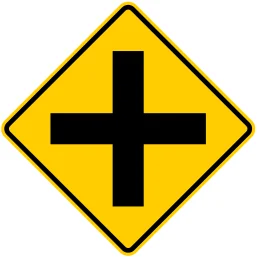
Intersection/Crossroad: another road crosses yours; watch for cross traffic
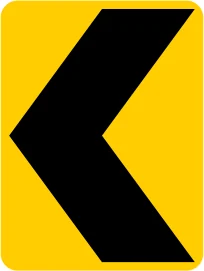
T-intersection ahead: the road doesn't go straight; prepare to turn right or left
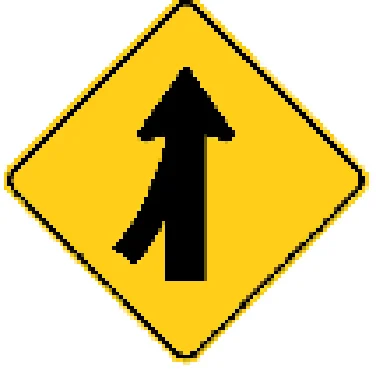
Merging traffic: on the main road, be ready for vehicles blending into your lane
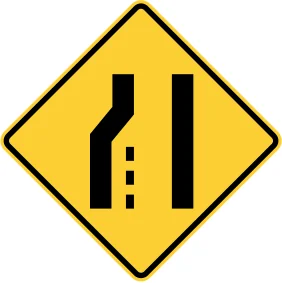
Lane ends: two lanes become one; traffic must yield when merging
Two-way traffic: you're leaving a one-way road for a two-way road; keep to the right
Divided highway begins: two-way traffic will be divided by a center strip
Divided highway ends: traffic no longer divided; watch for oncoming vehicles
Signal ahead: used on higher-speed roads; be ready for an intersection and a stop light
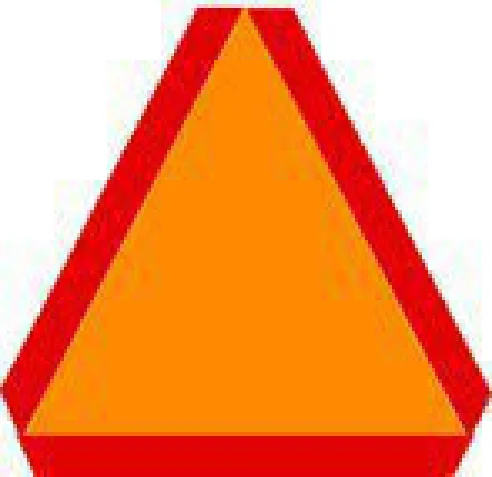
A reflective orange triangle on the rear of a vehicle means it travels 35 mph or less. You may see it on road maintenance equipment, farm vehicles, or horse-drawn wagons.
Past a Farm Machinery sign you come up on a tractor with an orange triangle on the back. It's going 35 mph or less: slow down early, stay back, and pass slowly only where passing is allowed and safe.
Check your understanding
Read the question, decide on an answer, then open it to check the explanation. These are Roadwise study questions based on the source handbook.
A T-intersection ahead sign warns you of what?
An upcoming stop light only
A four-way stop ahead
A school bus stop ahead
The road won't go straight
Answer: The road won't go straight
This sign warns that the road doesn't go straight ahead and you'll need to prepare to turn right or left.