A 4-minute lesson from the Iowa course. Read the rules and examples, follow the handbook page references, and check your understanding before you move on.
Trains can't stop quickly and can run on any track at any time. As you approach tracks, eliminate distractions, put your windows down, and turn off your music so you can hear. Never stop your vehicle on the tracks.
Actively protected crossing
Has lights and/or gates. Flashing lights or lowered gates mean a train is approaching—don't cross, and never go around a gate.
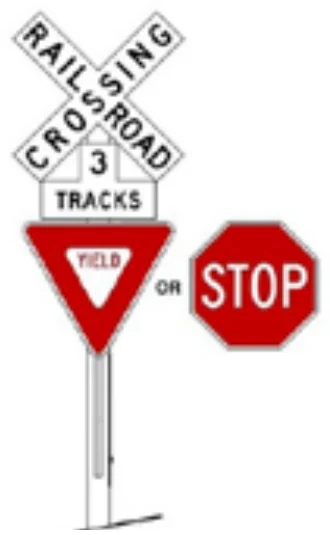
Passive crossing: crossbuck with a yield or stop sign
Know the rule
School buses, charter buses, drivers carrying passengers for hire (such as Uber or Lyft), and vehicles placarded for hazardous materials must stop within 15 to 50 feet of the tracks before crossing.
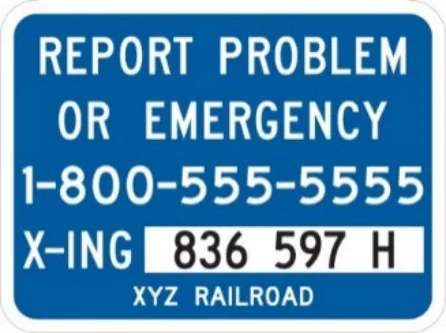
Blue and white sign with a phone number and crossing ID, different at each crossing. Also use it to report signal problems, debris or people on tracks, damaged signs, blocked views.
The only safe and legal place to cross railroad tracks is at a designated crossing. Rail cars have reflective stripes to help you spot them at night and in rain, snow, or fog.
You're driving for a rideshare with a passenger and reach a crossing with no EXEMPT sign and no officer directing traffic. Stop 15 to 50 feet from the tracks, look and listen both ways, then cross without shifting gears.
Check your understanding
Read the question, decide on an answer, then open it to check the explanation. These are Roadwise study questions based on the source handbook.
You are driving a vehicle for hire (like a rideshare) and approach a railroad crossing with no EXEMPT sign. What must you do?
Proceed without stopping since you're not a bus
Stop only if you see a train
Stop within 15 to 50 feet of the tracks
Slow to 20 mph but you don't need to stop
Answer: Stop within 15 to 50 feet of the tracks
Vehicles carrying passengers for hire, like Uber or Lyft, must stop within 15 to 50 feet of railroad tracks before crossing.