Roadwise States Arizona Driving lessons Where you can't park & emergency parking Arizona driving lesson · Passing, Lanes & Freeways
Where you can't park & emergency parking A 3-minute lesson from the Arizona course. Read the rules and examples, follow the handbook page references, and check your understanding before you move on.
Read time 3 minutes
Course unit Passing, Lanes & Freeways
Checkpoint questions 6
Source pages 29, 30, 31, 33 When you park on a public road you must not block traffic, block visibility, or park in an illegal zone. Arizona's handbook gives exact distances from hydrants, crosswalks and railroad tracks — learn them as a set.
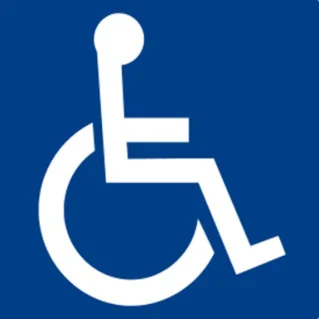
It is illegal to park: On a sidewalk In front of a private or public driveway Within the boundaries of an intersection On a crosswalk or within 20 feet of a crosswalk at an intersection On any freeway or interstate highway (except for an emergency) In any area with signs prohibiting parking Within 15 feet of a fire hydrant Within 50 feet of a railroad crossing On a bridge or within a tunnel In a way that creates a hazard for other vehicles Handbook p. 31 ↗ International Symbol of Access Know the rule
Spaces with the International Symbol of Access may be used only by a vehicle displaying a valid placard or plate with the symbol, and only when transporting the person it was issued to. Anyone else may be fined.
Handbook p. 30 ↗ If you must leave your vehicle on a highway or street: Pull onto the shoulder as far from traffic as possible; if there's a curb, get as close to it as you can Set the parking brake, shift into park (or leave a manual in gear) and turn off the engine Set out proper emergency signals Stay with your vehicle if possible until help arrives Lock your vehicle if you have to leave it Handbook p. 31 ↗ Know the rule
Parking on the freeway shoulder is prohibited except in an emergency.
Handbook p. 33 ↗ Put it into practice
You find an open curb spot 12 feet from a fire hydrant. Keep looking — you need at least 15 feet.
A useful reminder Hydrant 15, crosswalk 20, railroad 50 — the numbers go up as the danger goes up.
Check your understanding Read the question, decide on an answer, then open it to check the explanation. These are Roadwise study questions based on the source handbook.
How close to a fire hydrant is it illegal to park? Within 5 feet Within 30 feet Within 50 feet Within 15 feet Answer: Within 15 feet
It is illegal to park within 15 feet of a fire hydrant.
Handbook p. 31 ↗ How close to a railroad crossing is it illegal to park? Within 100 feet Within 20 feet Within 50 feet Within 15 feet Answer: Within 50 feet
It is illegal to park within 50 feet of a railroad crossing.
Handbook p. 31 ↗ How close to a crosswalk at an intersection is it illegal to park? Within 5 feet Within 20 feet Within 15 feet Within 50 feet Answer: Within 20 feet
It is illegal to park on a crosswalk or within 20 feet of a crosswalk at an intersection.
Handbook p. 31 ↗ If you must leave your vehicle parked on a highway shoulder in an emergency, what should you do first? Stop in the right lane with flashers on Leave the engine running Walk to the nearest exit for help Pull as far from traffic as possible Answer: Pull as far from traffic as possible
In an emergency, pull onto the shoulder as far from traffic as possible and set out proper emergency signals.
Handbook p. 31 ↗ It is illegal to park within the boundaries of an intersection. True False Answer: True
Parking within the boundaries of an intersection is prohibited.
Handbook p. 31 ↗ It is legal to park on a bridge or inside a tunnel as long as your hazard lights are on. True False Answer: False
Parking on a bridge or within a tunnel is illegal regardless of hazard lights.
Handbook p. 31 ↗ Previous lesson Freeway lanes, HOV & breakdowns Next lesson Parallel parking, hills & backing up More in Passing, Lanes & Freeways About the source Roadwise’s Arizona course uses the driver handbook edition supplied with this study pack. This lesson cites source pages 29, 30, 31, 33. The linked PDF is a third-party mirror of the handbook, rather than a government-hosted page.
Open the handbook source PDF · View the source edition
For current application requirements, fees, appointments, and the format that applies to your age or license type, check Arizona’s MVD. Roadwise provides study material and does not issue permits or licenses.