A 3-minute lesson from the Arizona course. Read the rules and examples, follow the handbook page references, and check your understanding before you move on.
Red, yellow and green signals control who moves at an intersection. They apply to pedestrians, bicyclists and moped riders as well as drivers. Obey them unless a police officer directing traffic tells you otherwise.
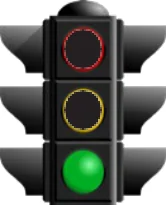
Green light
Know the rule
GREEN means go, if clear. Check left and right for red-light runners, and yield to any vehicle already in the intersection when the light changed.
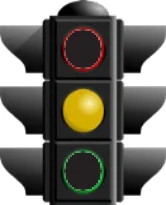
Steady YELLOW means caution — red is coming. If you haven't entered the intersection, come to a safe stop. If you're already in it, keep moving and clear it safely.
RED means stop completely before the intersection, stop line or crosswalk and stay stopped while it's red. Unless signs prohibit it, you may turn right after a complete stop when vehicles and pedestrians are clear.
Treat an inoperative (dark) traffic signal as a 4-way stop: stop completely, then go when clear. If two vehicles arrive at about the same time, the driver on the left yields to the driver on the right.
You're waiting to turn left on a flashing yellow arrow. An oncoming car and a pedestrian in the crosswalk are approaching. You may turn, but only after yielding to both.
Check your understanding
Read the question, decide on an answer, then open it to check the explanation. These are Roadwise study questions based on the source handbook.
What must you do at a steady yellow light if you have not yet entered the intersection?
Stop only if cross traffic is waiting
Come to a safe stop
Speed up to clear it
Proceed at the same speed
Answer: Come to a safe stop
A steady yellow light warns the light is about to turn red; if you haven't entered, come to a safe stop.