A 3-minute lesson from the Arizona course. Read the rules and examples, follow the handbook page references, and check your understanding before you move on.
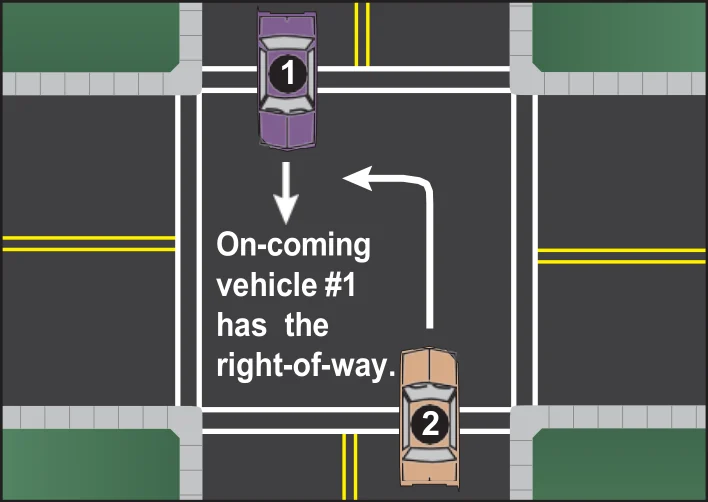
The law never actually "gives" anyone the right-of-way — it only says who must yield. And nobody may take the right-of-way if taking it could cause a crash. Know these yielding rules for T intersections, uncontrolled intersections, driveways, left turns and U-turns.
Know the rule
No one is allowed to take the right-of-way if taking it means a crash may result.
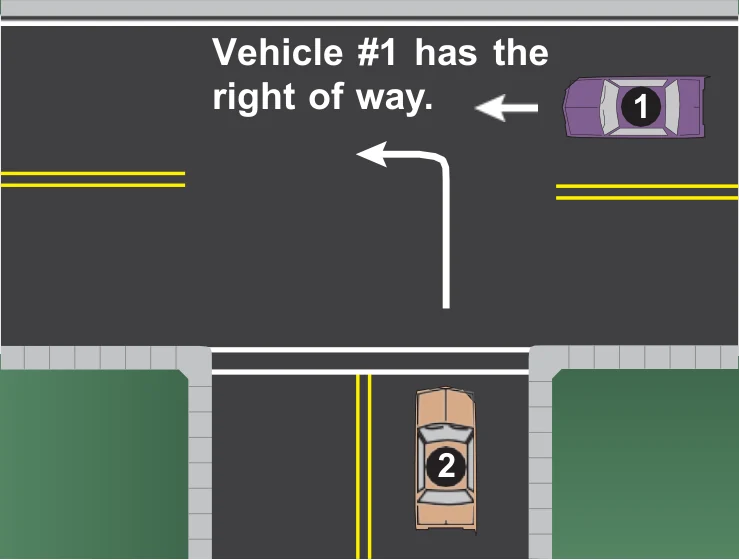
T intersection: vehicle #1 on the through street has the right-of-way
Know the rule
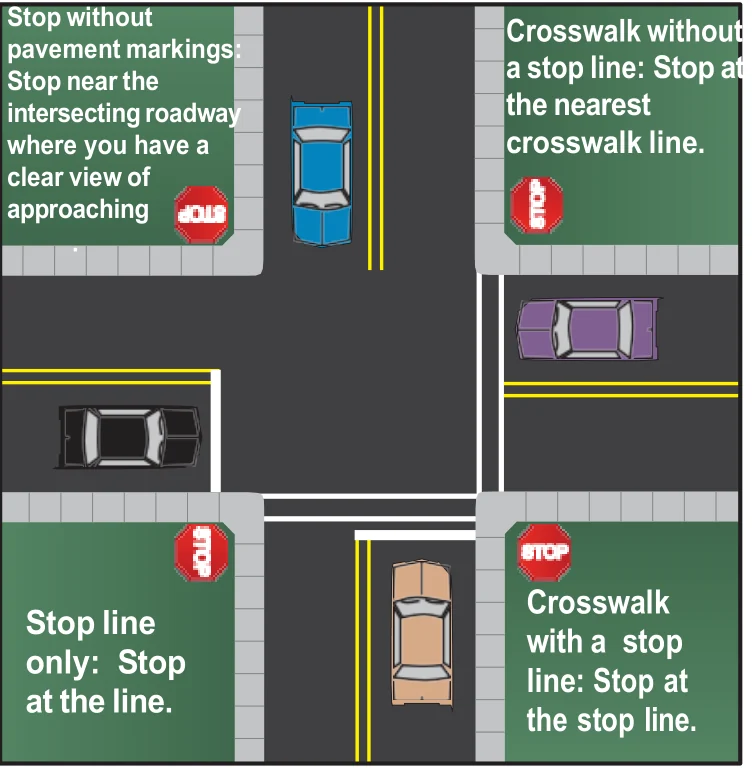
At controlled intersections, obey signals and signs and stop at the stop line. Don't assume it's safe just because you have the right-of-way — check for traffic and pedestrians.
Where to stop: at the stop line, before the crosswalk, or where you can see the intersecting road
Know the rule
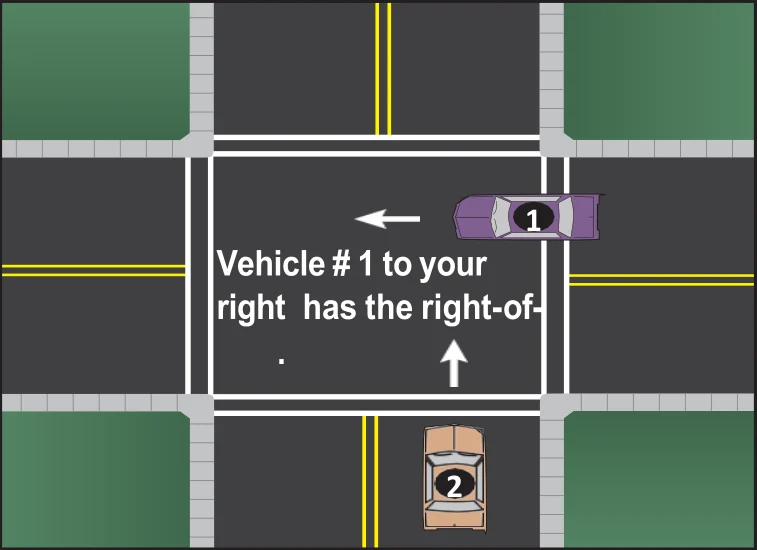
Treat an intersection with no traffic lights, stop signs or yield signs as a 4-way stop. If two vehicles arrive at about the same time, the driver on the left yields to the driver on the right.
You and another car reach an intersection with no signs or signals at the same moment; the other car is on your right. Both of you stop, and you — the driver on the left — yield.
Check your understanding
Read the question, decide on an answer, then open it to check the explanation. These are Roadwise study questions based on the source handbook.
At a 'T' intersection, who must yield the right-of-way?
The driver on the through street
Whoever arrives first
The driver turning right
The driver on the ending street
Answer: The driver on the ending street
At a 'T' intersection, the driver on the street which ends must yield to vehicles on the cross street.