A 3-minute lesson from the Wyoming course. Read the rules and examples, follow the handbook page references, and check your understanding before you move on.
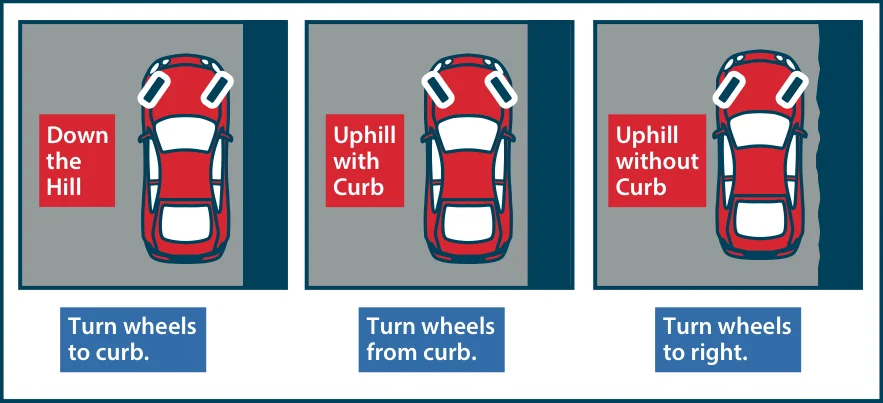
Where you park matters for safety: a car in the wrong place blocks views, hydrants and traffic. On hills, how you turn your wheels decides where the car goes if the brake fails.
It is not legal to park:
On the roadway side of any stopped or parked vehicle
On a sidewalk, within an intersection or in a crosswalk
Where the curb is painted yellow near intersections or driveways
Alongside or opposite any street construction site
On any bridge or within a highway tunnel
Where official signs prohibit standing, stopping or parking
In front of a public or private driveway
Within 15 feet of a fire hydrant
In a disabled space, unless you display a disabled placard or disabled plates
For an emergency stop, park with all four wheels off the pavement if possible. Don't stop on a hill or curve where you can't be seen easily, and turn on your emergency flashers.
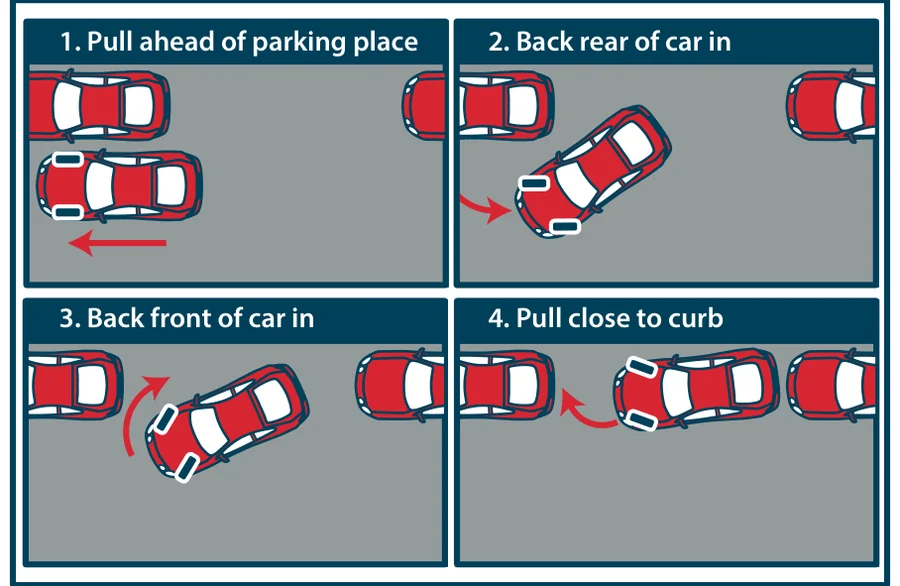
You parallel park facing uphill on a street with a curb. Turn your front wheels away from the curb and set the parking brake. If the car rolls, the tires will catch on the curb.
Check your understanding
Read the question, decide on an answer, then open it to check the explanation. These are Roadwise study questions based on the source handbook.
It is legal to park on the roadway side of another vehicle that is already stopped or parked.
True
False
Answer: False
It is not legal to park on the roadway side of any stopped or parked vehicle.