A 3-minute lesson from the Washington course. Read the rules and examples, follow the handbook page references, and check your understanding before you move on.
Buckling up correctly is the most effective thing you can do to protect yourself in a crash. Washington requires everyone in a moving vehicle to be belted or in the right child seat, and it sets clear stages by age and height.
Know the rule
Every person in a moving vehicle must wear a seat belt or be secured in an approved child restraint (RCW 46.61.687 and 46.61.688).
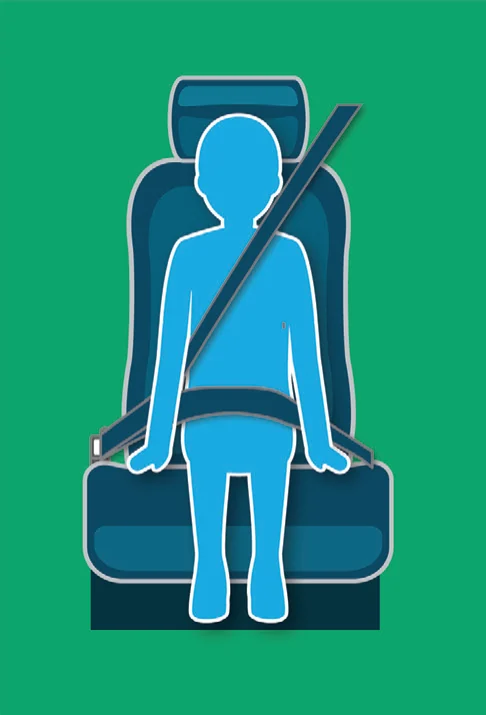
For a good fit, the lap belt rests on your upper thigh and the cross-body strap falls across your mid-shoulder; your knees bend at the seat edge and feet touch the floor.
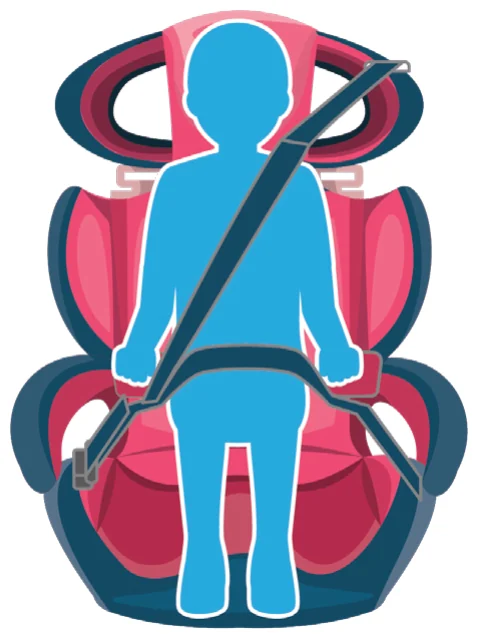
Child restraints must meet Federal Motor Vehicle Safety Standards and be installed per the vehicle and seat manufacturers' instructions. A certified child passenger safety technician can check it.
You're driving your 6-year-old nephew, who is 4'2". He's under 4'9", so he rides in a car or booster seat, and at under 13 he belongs in the back seat.
Check your understanding
Read the question, decide on an answer, then open it to check the explanation. These are Roadwise study questions based on the source handbook.
Every person in a moving vehicle must wear a seat belt or be secured in an approved child restraint.
True
False
Answer: True
Every occupant of a moving vehicle must be belted or properly restrained.