A 2-minute lesson from the Vermont course. Read the rules and examples, follow the handbook page references, and check your understanding before you move on.
Arrow signals control turning traffic separately from through traffic. The key question with each arrow is whether oncoming traffic might be coming at you, and so whether you must yield.
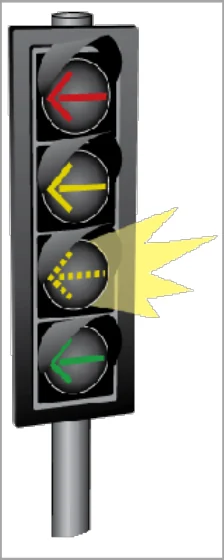
Left-turn arrows: red, yellow, flashing yellow and green
Left-turn arrows
Left-turn arrows
Arrow
Meaning
Solid red
Stop and wait; don't enter the intersection to turn
Solid yellow
About to turn red: prepare to stop
Flashing yellow
Turn after yielding to oncoming traffic and pedestrians
Solid green
Left turns have the right-of-way; oncoming has red
On a solid yellow arrow, complete the left turn only if you are legally within the intersection and there is no conflicting traffic. Otherwise prepare to stop.
You're waiting to turn left on a flashing yellow arrow. Oncoming cars have a green light and keep coming. Wait in place until there's a safe gap and the crosswalk is clear, then turn.
Check your understanding
Read the question, decide on an answer, then open it to check the explanation. These are Roadwise study questions based on the source handbook.
What must you do when facing a solid red arrow while intending to turn left?
Turn cautiously if no traffic is coming
Treat it like a flashing red arrow
Stop and do not enter the intersection
Proceed if you signaled early
Answer: Stop and do not enter the intersection
A solid red arrow means drivers intending to turn left must stop and wait, not enter the intersection.