A 4-minute lesson from the Utah course. Read the rules and examples, follow the handbook page references, and check your understanding before you move on.
Trucks are not large cars. They take longer to stop and speed up, need wider turns, and have large blind spots called no-zones. Most fatal car-truck crashes are caused by the car, so knowing how trucks move protects you.
71%
Fatal crashes of two or more vehicles, one a truck, that are caused by the other vehicle, usually a car (NHTSA)
Trucks have longer stopping and accelerating distances, wider turning areas, and more weight. On multi-lane highways, tractor-trailers stay in the center lane to help local traffic flow on and off.
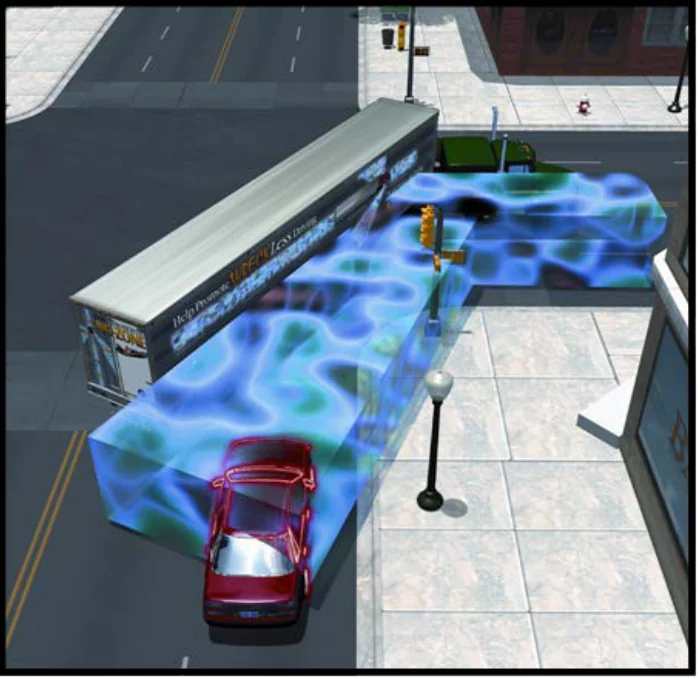
A turning truck's rear wheels follow a shorter path than the front, so tractor-trailers often swing left before turning right. Watch its signals and don't pass on the right or turn until it has finished.
Front no-zone: a loaded truck at 55 mph needs at least 335 feet to stop, more than 1.5 times a car. Never pull out or change lanes in front of it; after passing, wait until you see the whole front of the truck in your rearview mirror.
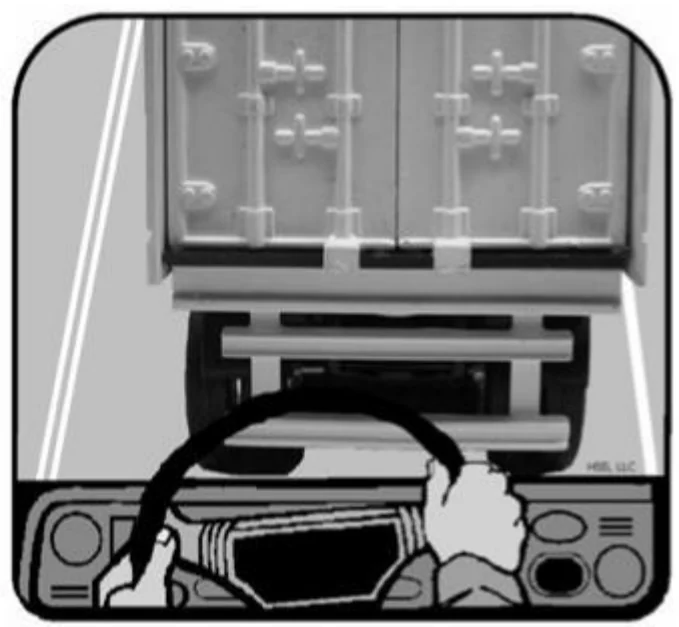
Rear no-zone: stay far enough back that the driver can see you in the side mirrors. Stopped behind a large vehicle on a hill, leave room; it may stall or roll backward.
Too close behind a truck: the driver can't see you and you can't see ahead
Put it into practice
You're passing a tractor-trailer on I-15 and your exit is coming up. Instead of cutting in right in front of it, you finish the pass, wait until the whole front of the truck shows in your rearview mirror, then move over.
Check your understanding
Read the question, decide on an answer, then open it to check the explanation. These are Roadwise study questions based on the source handbook.
How much longer can it take a fully loaded tractor-trailer to stop at 55 mph, compared to a car?
About the same distance as a car
200 feet, versus 100 feet for a car
600 feet, versus 500 feet for a car
More than 400 feet, versus about 130-140 feet for a car
Answer: More than 400 feet, versus about 130-140 feet for a car
A car at 55 mph stops in about 130-140 feet, while a fully loaded tractor-trailer may take more than 400 feet.