A 4-minute lesson from the Utah course. Read the rules and examples, follow the handbook page references, and check your understanding before you move on.
A parked car must never become a hazard. Park in marked areas, as far from traffic as possible, and close to the curb. Utah lists exact distances you must keep from hydrants, crosswalks, signs, and railroad tracks.
Never park:
On a sidewalk, in an intersection, or in front of a public or private driveway
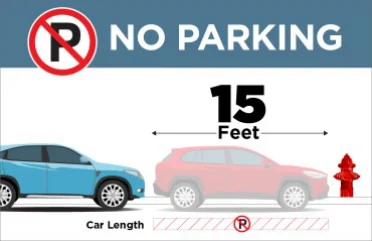
Within 15 feet of a fire hydrant
On a crosswalk, or within 20 feet of one
Within 20 feet of a fire station driveway (75 feet on the opposite side, if signs are posted)
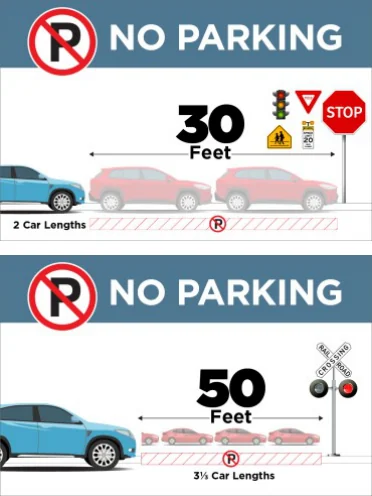
Within 30 feet of a flashing beacon, stop sign, yield sign, or traffic signal
In an area posted for pedestrian use, or within 30 feet of its edges
On a railroad track, or within 50 feet of the nearest rail of a crossing
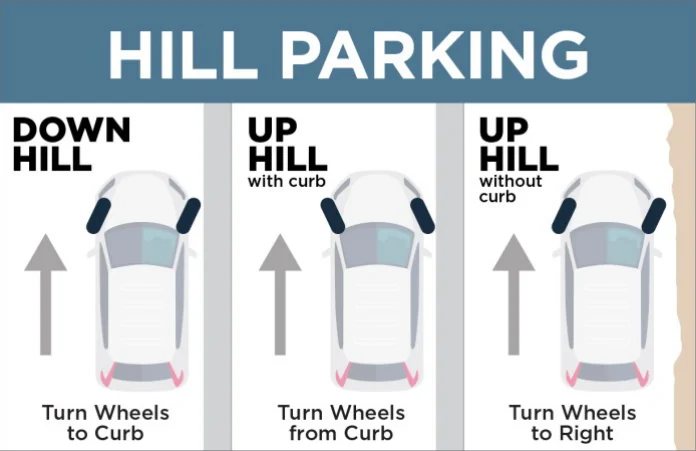
Hill parking: wheel positions for downhill and uphill
Know the rule
To park on a hill: signal right, head check over your right shoulder, pull parallel to the curb, turn the wheels, shift to Park, and set the parking brake. Never leave the car until the brake is set, the motor stopped, and doors locked.
You park downhill on a street with a curb. You turn your front wheels toward the curb until the tire touches it, set the parking brake, and put the car in Park. If the brake fails, the car rolls into the curb, not into traffic.
Check your understanding
Read the question, decide on an answer, then open it to check the explanation. These are Roadwise study questions based on the source handbook.
How close to a fire hydrant may you not park?
Within 10 feet
Within 15 feet
Within 20 feet
Within 25 feet
Answer: Within 15 feet
You may not park within 15 feet of a fire hydrant.