A 3-minute lesson from the Texas course. Read the rules and examples, follow the handbook page references, and check your understanding before you move on.
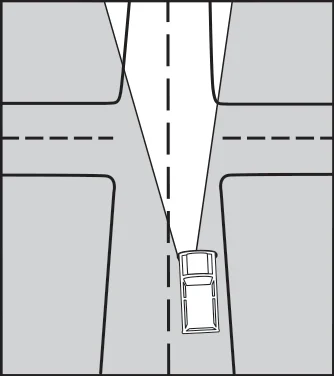
Speed shrinks your margin for error. The faster you go, the more space you need to stop and the less you can see to the sides. Texas measures following distance in seconds, and gives stopping distances you should know.
Pick an object near the road. When the car ahead passes it, count "one thousand-one, one thousand-two..." until your car's front reaches the same object.
Adjust speed and following distance to your physical condition and the condition of your vehicle and the road. If you're tired or not feeling well, don't drive.
At 60 mph your field of vision narrows to about one-fifth
Put it into practice
At 45 mph on a dry day, the car ahead passes a road sign. You count "one thousand-one, one thousand-two" and reach the sign. That's only two seconds, but above 30 mph you need four. Ease off the gas until you count four.
Check your understanding
Read the question, decide on an answer, then open it to check the explanation. These are Roadwise study questions based on the source handbook.
At 30 mph or below in good conditions, what is the minimum following interval?
1 second
2 seconds
4 seconds
6 seconds
Answer: 2 seconds
For speeds of 30 mph or less, the minimum following time is 2 seconds in good road conditions (p.51).