A 3-minute lesson from the Texas course. Read the rules and examples, follow the handbook page references, and check your understanding before you move on.
Parallel parking is on the Texas driving test, and the written test asks the curb distances. On hills, the way you turn your wheels keeps a parked car from rolling into traffic if the brakes fail.
Parallel parking steps
Choose a big enough space; signal before passing it, then stop even with the car ahead, about 2 feet out
Check oncoming traffic, turn wheels all the way right, and back slowly toward the curb
When your front seat is opposite the rear bumper ahead, turn the wheel all the way left; back without touching
Straighten your wheels, pull into final position, and center your car in the space
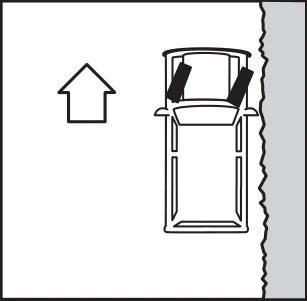
No curb: wheels turned right, toward the edge of the road
Know the rule
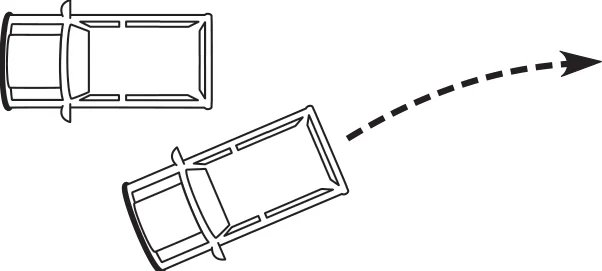
Leaving a parking space: check all mirrors for anything in your path, especially pedestrians and children, who often play between parked cars. Look back before and while backing, and signal that you're leaving.
You parallel park on a two-way street and end up 14 inches from the curb. That's legal, since the limit is 18 inches, but aim for about 6 inches. At 20 inches, you'd need to pull out and try again.
Check your understanding
Read the question, decide on an answer, then open it to check the explanation. These are Roadwise study questions based on the source handbook.
When parallel parked, what is the most your wheels may be from the curb?
18 inches
12 inches
24 inches
36 inches
Answer: 18 inches
On a two-way street, park with your right-hand wheels within 18 inches of the curb.