Roadwise States Tennessee Driving lessons Where you can't park Tennessee driving lesson · Parking & Backing
Where you can't park A 3-minute lesson from the Tennessee course. Read the rules and examples, follow the handbook page references, and check your understanding before you move on.
Read time 3 minutes
Course unit Parking & Backing
Checkpoint questions 6
Source pages 79, 80 You're responsible for making sure your parked car isn't a hazard. Park in designated areas when you can, far enough from travel lanes and easy to see from both directions. Many no-parking rules protect emergency access and sight lines.
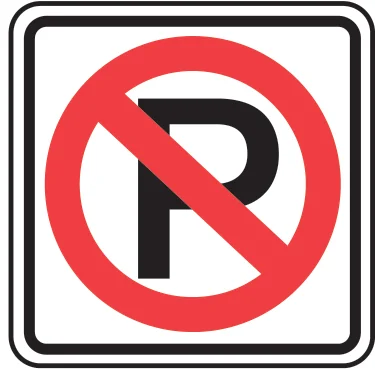
It's illegal to park: In front of a public or private driveway On interstate entrance or exit ramps (unless disabled) Within an intersection Within 15 feet of a fire hydrant In a fire lane In a crosswalk or within 20 feet of one Within 30 feet of a traffic signal, stop sign or other control device Within 50 feet of a railroad crossing On a sidewalk On a bridge or in a tunnel Handbook p. 79 ↗ Also illegal: Parking in a handicap space unless you're entitled to it Double parking (on the traffic side of a parked car) Parking on an interstate shoulder except in an emergency Parking where signs prohibit stopping or standing Handbook p. 79 ↗ No parking sign Know the rule
Outside city limits, park with all four wheels off the pavement if possible. You must leave at least 18 feet of road for traffic, and your car must be visible for 200 feet in each direction.
Handbook p. 79 ↗ 18 feet Road width you must leave for traffic when parked beside a rural road
Handbook p. 79 ↗ Know the rule
In cities and towns, signs or yellow-painted curbs usually mark a no-parking zone.
Handbook p. 79 ↗ Painted curb colors can mean: Stop only long enough to pick up or drop off passengers Stop only to load or unload — stay with your car Do not stop, stand or park at all Handbook p. 80 ↗ Know the rule
It's illegal to leave the engine running in a parked, unattended car. Take the keys, and lock the doors.
Handbook p. 79 ↗ Put it into practice
You find a spot 25 feet from a stop sign. Tempting — but you need 30 feet. The space 10 feet from a hydrant is also out (15 feet). Keep looking.
A useful reminder 15 hydrant, 20 crosswalk, 30 stop sign or signal, 50 railroad.
Check your understanding Read the question, decide on an answer, then open it to check the explanation. These are Roadwise study questions based on the source handbook.
How close to a fire hydrant is it illegal to park? Within 5 feet Within 30 feet Within 50 feet Within 15 feet Answer: Within 15 feet
It is illegal to park within 15 feet of a fire hydrant.
Handbook p. 79 ↗ How close to a marked crosswalk is it illegal to park? Within 20 feet Within 5 feet Within 15 feet Within 50 feet Answer: Within 20 feet
It is illegal to park within 20 feet of a crosswalk or in the crosswalk itself.
Handbook p. 79 ↗ How close to a railroad crossing is it illegal to park? Within 15 feet Within 50 feet Within 20 feet Within 500 feet Answer: Within 50 feet
It is illegal to park within 50 feet of a railroad crossing.
Handbook p. 79 ↗ How close to a stop sign or traffic signal is it illegal to park? Within 15 feet Within 50 feet Within 30 feet Within 5 feet Answer: Within 30 feet
It is illegal to park within 30 feet of a traffic signal, stop sign, or other traffic control device.
Handbook p. 79 ↗ How close to a fire station driveway, on the SAME side of the street, is it illegal to park? Within 75 feet Within 50 feet Within 15 feet Within 20 feet Answer: Within 20 feet
Parking within 20 feet of a fire station driveway on the same side, or 75 feet on the opposite side, is illegal.
Handbook p. 79 ↗ When parked outside city limits alongside a roadway, you must leave how many feet of road width for passing traffic? At least 18 feet At least 5 feet At least 30 feet At least 50 feet Answer: At least 18 feet
When parked adjacent to a roadway outside city limits, you must leave at least 18 feet of road width for other traffic.
Handbook p. 79 ↗ Previous lesson Backing & parking on hills Next lesson Parallel & angle parking More in Parking & Backing About the source Roadwise’s Tennessee course uses the driver handbook edition supplied with this study pack. This lesson cites source pages 79, 80. The linked PDF is a third-party mirror of the handbook, rather than a government-hosted page.
Open the handbook source PDF · View the source edition
For current application requirements, fees, appointments, and the format that applies to your age or license type, check Tennessee’s DOS. Roadwise provides study material and does not issue permits or licenses.