roadwise.Open study app

South Dakota driving lesson · Special Driving Situations

Work zones

A 2-minute lesson from the South Dakota course. Read the rules and examples, follow the handbook page references, and check your understanding before you move on.

Read time
2 minutes
Course unit
Special Driving Situations
Checkpoint questions
4
Source pages
63

Work zones mean narrow lanes, rough pavement, moving equipment and people working close to traffic. They've become increasingly dangerous for workers and drivers alike.

Work zone

An area where roadwork takes place; it may involve lane closures, detours, and moving equipment.

Handbook p. 63 ↗
40,000

Approximate number of people injured each year in motor vehicle crashes in work zones

Handbook p. 63 ↗

Know the rule

When approaching, watch for signs, cones, barrels, large vehicles and workers. Work zone signs have an orange background with black letters or symbols.

Handbook p. 63 ↗

Know the rule

Always reduce your speed in a work zone, even if no workers are present. Speed limits may be reduced, and fines for speeding in a work zone may be doubled.

Handbook p. 63 ↗

Know the rule

Digital signs may warn of changing conditions such as slow or stopped traffic ahead; some detect traffic speeds automatically. Pay attention to all signs and messages.

Handbook p. 63 ↗

As a driver in a work zone:

  • Reduce your speed and increase your following distance
  • Watch the traffic around you and be prepared to stop
  • Use extreme caution at night, whether workers are present or not
  • Adjust lane position to give workers and construction vehicles space
  • Obey work zone signs until you see "End Road Work"
  • Expect delays and leave early; use alternate routes when you can
Handbook p. 63 ↗
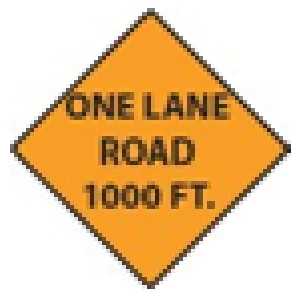
One lane road ahead
One lane road ahead work zone sign

Put it into practice

It's Sunday and the construction site is empty, but the reduced work zone speed limit is still posted. Obey it: the narrow lanes and rough pavement are still there, and speeding fines may be doubled.

Check your understanding

Read the question, decide on an answer, then open it to check the explanation. These are Roadwise study questions based on the source handbook.

About how many people per year are injured in work zone crashes, according to the handbook?
  1. Approximately 4,000
  2. Approximately 40,000
  3. Approximately 400,000
  4. Approximately 400

Answer: Approximately 40,000

Approximately 40,000 people per year are injured in motor vehicle crashes in work zones.
Handbook p. 63 ↗
What should you do when approaching a work zone, even if no workers are visible?
  1. Move into the leftmost lane immediately
  2. Reduce your speed
  3. Speed up to clear it sooner
  4. Maintain your normal speed

Answer: Reduce your speed

Always reduce your speed in a work zone even if there are no workers present, due to narrow lanes and rough pavement.

Handbook p. 63 ↗
What should guide your driving in a work zone regarding posted signs?
  1. Follow them until the workers are behind you
  2. Follow them until the lanes widen again
  3. Follow them only while cones are present
  4. Follow posted signs until 'End Road Work'

Answer: Follow posted signs until 'End Road Work'

Observe the posted work zone signs until you see the 'End Road Work' sign.

Handbook p. 63 ↗
You should use extreme caution driving through a work zone at night whether or not workers are present.
  1. True
  2. False

Answer: True

The handbook specifically advises extreme caution in work zones at night, regardless of whether workers are present.

Handbook p. 63 ↗
Take the lesson checkpoint in the app

More in Special Driving Situations