roadwise.Open study app

South Carolina driving lesson · Signs, Signals & Markings

Warning & railroad crossing signs

A 3-minute lesson from the South Carolina course. Read the rules and examples, follow the handbook page references, and check your understanding before you move on.

Read time
3 minutes
Course unit
Signs, Signals & Markings
Checkpoint questions
6
Source pages
63, 64, 65, 66

A sign's shape, color, symbols and words tell you what kind of message it has. Warning signs tell you about possible danger ahead, so slow down and be ready to stop or react.

Know the rule

Warning signs are usually yellow with black lettering or symbols, and typically diamond-shaped. School zone, school crossing and pedestrian crossing signs may be fluorescent yellow.

Handbook p. 63 ↗

Common warning signs:

  • Cross Road, Side Road, T-Intersection and Y-Intersection Ahead
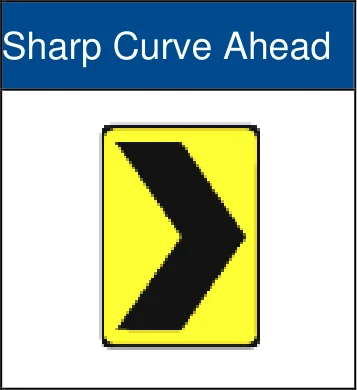
  • Curvy Road Ahead, Right Curve, Sharp Curve Ahead
  • Advisory Speed Around Curve
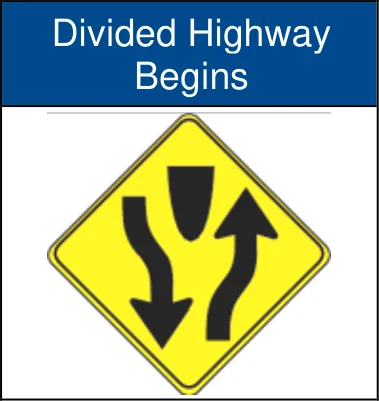
  • Divided Highway Begins / Divided Highway Ends
  • Lane Ends, Merging Traffic, Added Lane
  • Traffic Signal Ahead, Stop Sign Ahead
  • School Crossing, Pedestrian Crossing
  • Share the Road with Bicycles, Bicycle Crossing, Slippery When Wet
Handbook p. 64 ↗
Divided highway begins
Divided Highway Begins
Sharp curve
Sharp Curve Ahead
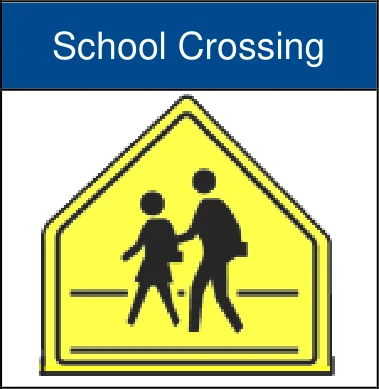
School crossing
School Crossing
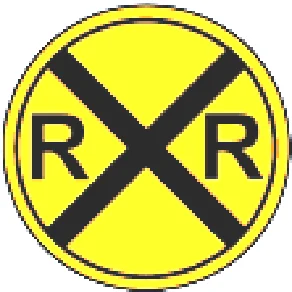
Railroad crossing ahead
Railroad advance warning sign

Know the rule

The round yellow sign with an X and "RR" comes before a highway-railroad grade crossing: slow down, look and listen for a train, and be ready to stop.

Handbook p. 65 ↗
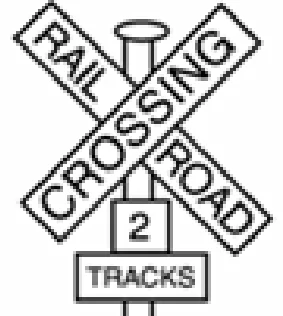
Multiple tracks
Railroad crossbuck with number of tracks

Know the rule

The white X-shaped "Railroad Crossing" sign (crossbuck) marks the crossing. If a train is approaching, stop behind the stop line or before the crossing until it's clear.

Handbook p. 65 ↗

Know the rule

Crossings with more than one track post the number of tracks. More than one train may be coming.

Handbook p. 65 ↗

Know the rule

Not all crossings have lights. Look both ways and cross the tracks quickly, without stopping.

Handbook p. 66 ↗

Know the rule

If a train is crossing, wait until it's well down the track or the lights and gates show it's safe. If you must stop for traffic or a signal, stop at the stop line before the tracks.

Handbook p. 66 ↗

Know the rule

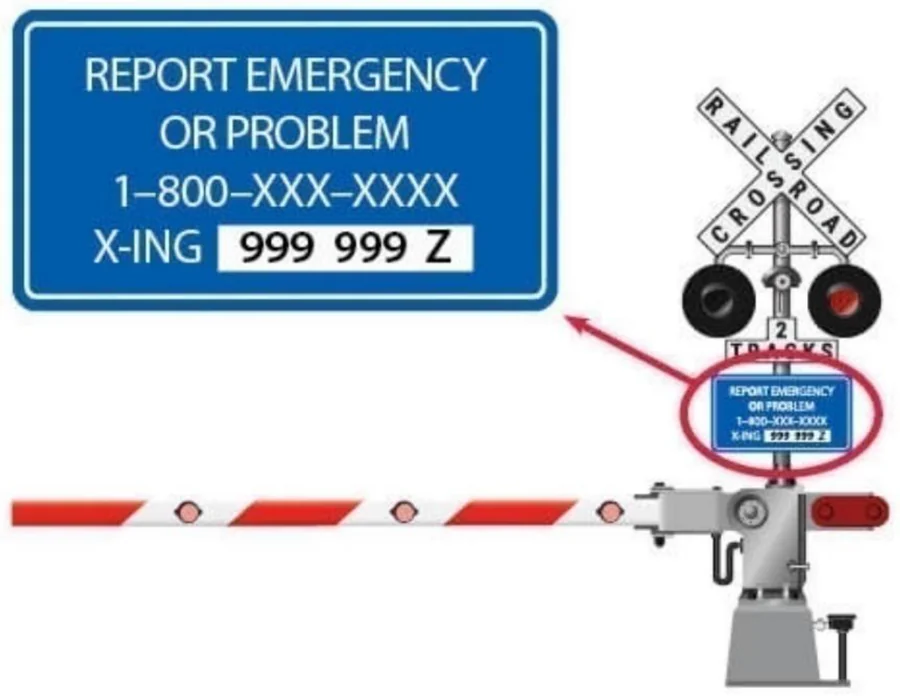
If your vehicle ever gets stuck on a track, call the emergency number on the blue sign and give the crossing information.

Handbook p. 66 ↗
Railroad emergency notification sign
Blue emergency sign posted at a crossing

Put it into practice

Traffic ahead is backed up past a railroad crossing. Don't follow onto the tracks. Stop at the stop line before them and wait until there's room to cross completely.

Check your understanding

Read the question, decide on an answer, then open it to check the explanation. These are Roadwise study questions based on the source handbook.

Warning signs are typically what shape and color?
  1. Red octagon with white lettering
  2. Yellow diamond, black lettering
  3. Green rectangular with white lettering
  4. Blue circular with black lettering

Answer: Yellow diamond, black lettering

Warning signs are usually yellow with black lettering or symbols and are typically diamond shaped.
Handbook p. 63 ↗
Some warning signs, such as school zones and pedestrian crossings, may be:
  1. Solid red
  2. Bright orange
  3. Fluorescent yellow
  4. Reflective silver

Answer: Fluorescent yellow

Some warning signs, such as school zones, school crossings, and pedestrian crossings, may be fluorescent yellow.

Handbook p. 63 ↗
A round yellow sign with a black 'X' and 'RR' letters warns you to:
  1. Stop at the sign every time
  2. Stop only if a gate is down
  3. Ignore it unless lights are flashing
  4. Slow, look, and listen for a train

Answer: Slow, look, and listen for a train

This sign cautions you to slow down, look, and listen for a train, and be prepared to stop.

Handbook p. 65 ↗
A white, X-shaped sign that says 'Railroad Crossing' at the crossing means:
  1. You must stop if a train is approaching
  2. You must always stop, even with no train present
  3. The crossing is still some distance ahead
  4. You may cross without looking

Answer: You must stop if a train is approaching

When a train or railroad vehicle is approaching, you must stop behind the stop line until the crossing is clear.

Handbook p. 65 ↗
If a highway-railroad crossing has more than one track, what will be posted?
  1. A stop sign for all vehicles
  2. The number of tracks
  3. The speed limit for trains
  4. Nothing additional is posted

Answer: The number of tracks

At crossings with more than one track, the number of tracks will be posted to warn you.

Handbook p. 65 ↗
When crossing railroad tracks with no lights present, you should:
  1. Always stop first, even if clear
  2. Cross slowly, scanning both ways
  3. Look both ways, then cross quickly
  4. Wait for a car ahead to cross first

Answer: Look both ways, then cross quickly

Not all crossings have lights; look both ways and cross the tracks quickly, without stopping.

Handbook p. 66 ↗
Take the lesson checkpoint in the app

More in Signs, Signals & Markings