South Carolina driving lesson · Signs, Signals & Markings
Traffic signals
A 3-minute lesson from the South Carolina course. Read the rules and examples, follow the handbook page references, and check your understanding before you move on.
Traffic control devices tell every road user when and where to stop and go. Signals are the most common, but directions from people at the scene count too.
Traffic control devices
Traffic signals, signs, pavement markings, and directions given by law enforcement, highway personnel and school crossing guards.
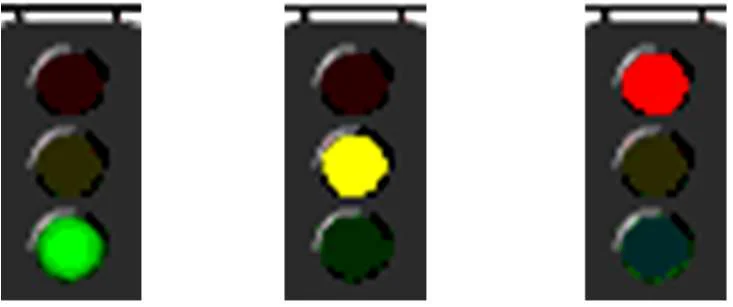
Vertical signals show red on top, yellow in the middle, green on the bottom. Horizontal signals (in some metropolitan areas) show red on the left, yellow in the middle, green on the right.
Right turn on red is allowed unless a sign prohibits it. Stop before the near crosswalk, then yield to pedestrians in or next to the crosswalk and to other traffic.
You're stopped at a red light, want to turn right, and see no NO TURN ON RED sign. After your full stop, a pedestrian steps into the crosswalk you'd turn across. Wait for them to cross and for traffic to clear, then turn.
Check your understanding
Read the question, decide on an answer, then open it to check the explanation. These are Roadwise study questions based on the source handbook.
A yellow traffic light means:
Red is next; prepare to stop
You must speed up to beat the light
You may proceed without caution
Stop only if a pedestrian is waiting
Answer: Red is next; prepare to stop
A yellow caution light is a warning that the signal is about to change to red; you should stop and wait for the next green light.