A 3-minute lesson from the South Carolina course. Read the rules and examples, follow the handbook page references, and check your understanding before you move on.
Pedestrians are hard to see, and it's hard to tell what they'll do. They have no protection in a crash, so the law puts the burden on you to watch for them and yield.
Yielding to pedestrians:
Always be prepared to yield, even if they're not in a crosswalk
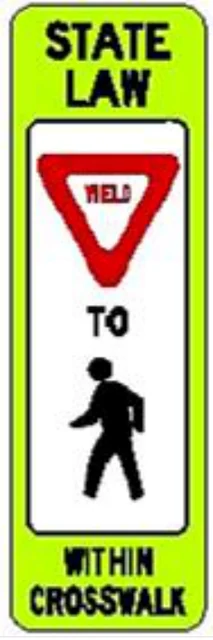
Yield to a pedestrian in any crosswalk, marked or unmarked, including signed mid-block crosswalks
Always yield to people who are visually impaired
Come to a complete stop for a pedestrian guided by a dog or carrying a white cane
Yield to all pedestrians in the intersection, even if your light is green
Next to parked or stopped vehicles, pedestrians can walk out between them. Slow down, and don't pass a stopped vehicle until you're sure no one is crossing in front of it.
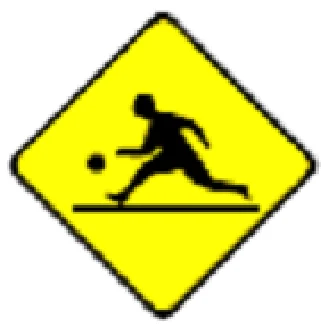
In playground and residential areas, children can run out from between parked cars. Drive slower than the speed limit there and be ready to stop quickly.
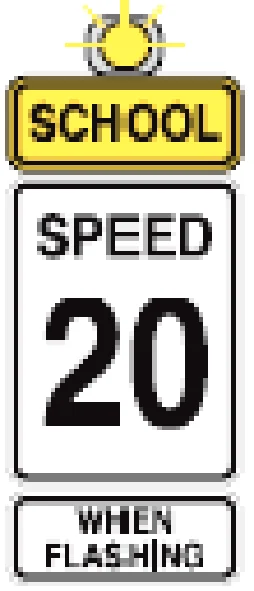
In a school zone when lights are flashing or children are present, obey the slower speed limit. At a school crossing with traffic patrol, stop and yield if signaled to.
A man with a white cane steps off the curb mid-block where there's no painted crosswalk. Come to a complete stop and let him cross. You must always yield to a visually impaired pedestrian.
Check your understanding
Read the question, decide on an answer, then open it to check the explanation. These are Roadwise study questions based on the source handbook.
You must yield to a pedestrian in a crosswalk:
Even if the crosswalk is unmarked
Only if it is marked with paint
Only during school hours
Only if a crossing guard is present
Answer: Even if the crosswalk is unmarked
You must yield when a pedestrian is in a crosswalk, even if it is unmarked.