Pennsylvania driving lesson · Parking and Emergencies
Floods, drop-offs and head-on threats
A 3-minute lesson from the Pennsylvania course. Read the rules and examples, follow the handbook page references, and check your understanding before you move on.
Flooding is one of Pennsylvania's top hazards; since 2006 nearly half of PA flooding deaths were vehicle-related. Water is deeper and stronger than it looks. Drifting onto a low shoulder and meeting a car in your lane also call for calm, specific moves.
Why floodwater is so dangerous
6 inches (the length of a dollar bill) can make some cars lose control or stall and float small vehicles
12 inches of moving water can float many cars
2 feet of moving water can move most SUVs and pick-up trucks
Water can hide missing pavement or bridges and weaken the road; night can hide the flood itself
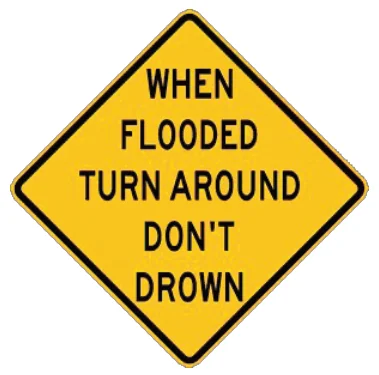
Turn Around, Don't Drown: find another route and never try to cross a flooded road. It's against the law to pass a flood control barrier. If you get stuck, get out quickly and move to higher ground.
Drop-offs happen when you drive too close to the edge or too fast through a curve, and are common on rural roads and resurfacing projects. Don't steer sharply (the car can whip into oncoming traffic) and don't brake hard (it will probably skid).
If a vehicle comes at you head-on in your lane, honk first. If it doesn't move over, escape to the right if possible (swerving left fails if the other driver corrects). If a crash is unavoidable, brake firmly and steadily; every mph slower reduces the impact.
You come around a bend at night and water covers the road ahead; you can't tell how deep it is. Turn around and find another route. Even 12 inches of moving water can float many cars.
Check your understanding
Read the question, decide on an answer, then open it to check the explanation. These are Roadwise study questions based on the source handbook.
If another vehicle is heading toward you head-on in your lane, what is the first thing to do?
Swerve left immediately
Continue straight without slowing
Honk to get their attention
Flash your high beams and hold your lane
Answer: Honk to get their attention
Honking first alerts the other driver, who may correct before you need to take evasive action.