Roadwise States New Hampshire Driving lessons Pedestrians New Hampshire driving lesson · Sharing the Road
Pedestrians A 3-minute lesson from the New Hampshire course. Read the rules and examples, follow the handbook page references, and check your understanding before you move on.
Read time 3 minutes
Course unit Sharing the Road
Checkpoint questions 6
Source pages 43 Vehicle-pedestrian collisions account for nearly 20 percent of all traffic deaths each year. Pedestrians are hard to see and their intentions are hard to read, so be ready to yield to them at all times, especially near schools, bus stops, playgrounds and parks.
Nearly 20% Share of all traffic deaths each year from vehicle-pedestrian collisions
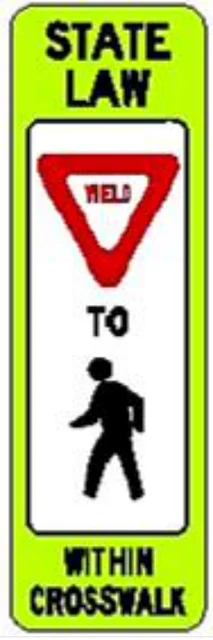
Handbook p. 43 ↗ Pedestrians have the right-of-way when: In a crosswalk Using a sidewalk, or crossing an alley entrance or driveway Visually impaired and crossing with a service animal or a white cane with a red tip Handbook p. 43 ↗ State law: yield to pedestrians within crosswalk Pedestrians must: Use crosswalks at intersections and obey pedestrian signs and signals Look both ways before crossing any roadway With no sidewalk, walk on the left side of the road facing oncoming traffic Wear white or light clothing, or carry a light, at night Never walk on interstate or limited access highways Handbook p. 43 ↗ Use caution when: Driving next to parked or stopped vehicles; people can step out between them Backing up, especially in parking lots or places with many pedestrians Approaching a school zone with flashing lights or children present Handbook p. 43 ↗ Know the rule
At a school crossing with a crossing guard, stop and yield if you're signaled to.
Handbook p. 43 ↗ Know the rule
NH law requires you to come to a complete stop whenever a person carrying a white cane or using a harnessed guide dog is trying to cross the road.
Handbook p. 43 ↗ Know the rule
A visually impaired person listens for traffic to stop before crossing. Stop completely, proceed with extra caution, and NEVER honk or yell at them.
Handbook p. 43 ↗ White cane The international symbol of blindness. A pedestrian carrying one (or using a harnessed guide dog) triggers NH's full-stop requirement.
Handbook p. 43 ↗ Put it into practice
A man with a white cane stands at the curb, listening, at an unmarked corner. Come to a complete stop and wait. He'll cross once he hears traffic stop. Don't honk to wave him across.
A useful reminder White cane or guide dog = full STOP, not just slow down.
Check your understanding Read the question, decide on an answer, then open it to check the explanation. These are Roadwise study questions based on the source handbook.
About what percentage of all traffic deaths each year involve vehicle-pedestrian collisions? Nearly 20 percent Nearly 50 percent Nearly 5 percent Nearly 35 percent Answer: Nearly 20 percent
Vehicle-pedestrian collisions account for nearly 20 percent of traffic deaths each year.
Handbook p. 43 ↗ Which of these situations gives a pedestrian the right-of-way? Jogging along a bike path Walking in a marked crosswalk Standing on a median island Crossing mid-block against a signal Answer: Walking in a marked crosswalk
Pedestrians have the right-of-way when in a crosswalk.
Handbook p. 43 ↗ What symbol indicates a pedestrian is visually impaired and has the right-of-way while crossing? A yellow cane with a black tip An orange safety vest A red cane with a white tip A white cane with a red tip Answer: A white cane with a red tip
A white cane with a red tip is the international symbol of blindness, giving right-of-way.
Handbook p. 43 ↗ When there is no sidewalk, on which side of the road should pedestrians walk? The left side, facing oncoming traffic Either side, it doesn't matter The center of the road for visibility The right side, with traffic flow Answer: The left side, facing oncoming traffic
Pedestrians should walk on the left, facing oncoming traffic, when there's no sidewalk.
Handbook p. 43 ↗ What must a driver do when a person using a white cane or guide dog is attempting to cross the road? Yield only if other traffic allows Slow down and proceed carefully Come to a complete stop Honk to alert the pedestrian Answer: Come to a complete stop
NH law requires drivers to fully stop for a visually impaired pedestrian attempting to cross.
Handbook p. 43 ↗ What should a driver NEVER do around a visually impaired pedestrian who is crossing the road? Use extra caution while proceeding Come to a complete stop Honk the horn or yell at them Wait for them to finish crossing Answer: Honk the horn or yell at them
Drivers must never honk or yell at a visually impaired pedestrian, as this can be disorienting or dangerous.
Handbook p. 43 ↗ Previous lesson Stuck accelerator, headlight failure, and breakdowns Next lesson Bicyclists About the source Roadwise’s New Hampshire course uses the driver handbook edition supplied with this study pack. This lesson cites source pages 43. The linked PDF is a third-party mirror of the handbook, rather than a government-hosted page.
Open the handbook source PDF · View the source edition
For current application requirements, fees, appointments, and the format that applies to your age or license type, check New Hampshire’s DMV. Roadwise provides study material and does not issue permits or licenses.