roadwise.Open study app

Nebraska driving lesson · Signals & Signs

Special signs and work zones

A 3-minute lesson from the Nebraska course. Read the rules and examples, follow the handbook page references, and check your understanding before you move on.

Read time
3 minutes
Course unit
Signals & Signs
Checkpoint questions
6
Source pages
50, 51

Guide and service signs help you find your way, and work zone devices protect you and road crews. In Nebraska, black-on-orange always means a work zone.

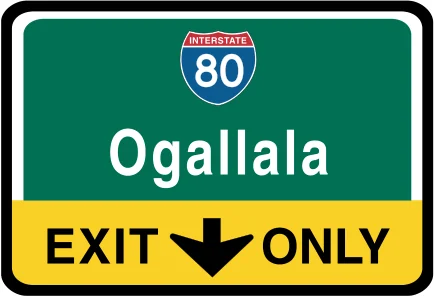
Exit sign
Guide sign

Special signs:

  • Guide signs (green and white): direction and distance; diagrams for interchange exits and entrances
  • Service signs (blue and white): hospitals, gas, food, lodging and other services
  • Route markers: used alone or with arrow signs mounted below
  • Handicapped Parking: spaces reserved for those with handicapped parking privileges
  • Dynamic message signs: changeable messages on conditions, routes, construction and incidents
Handbook p. 50 ↗
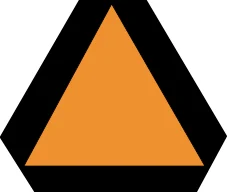
Slow-moving vehicle emblem
Slow Moving Vehicle emblem
25 MPH

Vehicles that travel at or below this speed, such as farm equipment, must display the slow moving vehicle emblem on public roads

Handbook p. 50 ↗
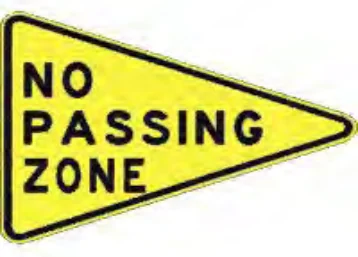
No passing zone
No Passing Zone pennant

Know the rule

A yellow No Passing Zone pennant may be posted on the left side of the road at the beginning of a no-passing zone.

Handbook p. 50 ↗

Know the rule

Reference post markers are placed on Nebraska highways at one-mile increments as reference points when you need help or an emergency exists.

Handbook p. 50 ↗

Know the rule

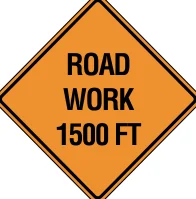
Black-on-orange signs are reserved strictly for work zones. They appear before and inside the zone and give enough advance notice for any action, like changing lanes or slowing down. Don't wait until the last minute.

Handbook p. 51 ↗
Road work ahead
Work zone sign

Work zone devices:

  • Flashing arrow panels: guide you into lanes; part of the road ahead is closed
  • Work zone signs: mostly diamond-shaped; warn of unusual conditions near work areas
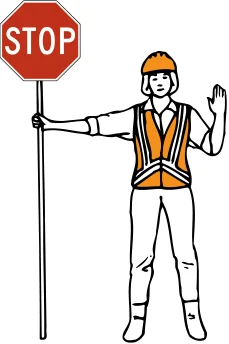
  • Flagger sign: a flagger in an orange vest with a STOP/SLOW paddle is ahead
  • Channelizing devices: barricades, vertical panels, drums and cones guide you through
Handbook p. 51 ↗
Flagger stop paddle
Flagger holding STOP paddle

Know the rule

When you see the Flagger sign, stay alert and be prepared to stop. If the flagger stops you, remain stopped until directed to proceed.

Handbook p. 51 ↗

Put it into practice

An orange diamond ahead reads ROAD WORK 1500 FT. Stay alert, slow down, and be ready to stop or change lanes as the work zone signs direct. If a flagger holds up STOP, wait until you're waved on.

Check your understanding

Read the question, decide on an answer, then open it to check the explanation. These are Roadwise study questions based on the source handbook.

The slow-moving vehicle emblem must be displayed on vehicles that travel:
  1. 35 MPH or less
  2. 25 MPH or less
  3. 15 MPH or less
  4. 45 MPH or less

Answer: 25 MPH or less

Vehicles traveling 25 mph or less must display the slow-moving emblem.
Handbook p. 50 ↗
Reference post markers on Nebraska highways are spaced at intervals of:
  1. Half a mile
  2. Five miles
  3. One mile
  4. A quarter mile

Answer: One mile

Reference posts are placed at one-mile increments.

Handbook p. 50 ↗
A yellow 'No Passing Zone' pennant sign is typically posted:
  1. On the right side of the road at the end of the zone
  2. In the center of the road
  3. Only at intersections
  4. On the left side of the road at the beginning of the zone

Answer: On the left side of the road at the beginning of the zone

The pennant sign marks the left-side start of a no-passing zone.

Handbook p. 50 ↗
Black-on-orange signs are used exclusively to identify:
  1. Work zones
  2. School zones
  3. Railroad crossings
  4. Recreation areas

Answer: Work zones

Black-on-orange signs are reserved for work zone identification.

Handbook p. 51 ↗
A flagger controlling traffic in a work zone uses a paddle that reads:
  1. GO/WAIT
  2. YIELD/PASS
  3. STOP/SLOW
  4. CAUTION/CLEAR

Answer: STOP/SLOW

Flaggers use a STOP/SLOW paddle to control traffic.

Handbook p. 51 ↗
Channelizing devices used to guide drivers through a work zone include:
  1. Flashing arrow panels only
  2. Rumble strips and pavement markings
  3. Dynamic message signs only
  4. Barricades, vertical panels, drums, and cones

Answer: Barricades, vertical panels, drums, and cones

Channelizing devices include barricades, panels, drums, and cones.

Handbook p. 51 ↗
Take the lesson checkpoint in the app

More in Signals & Signs