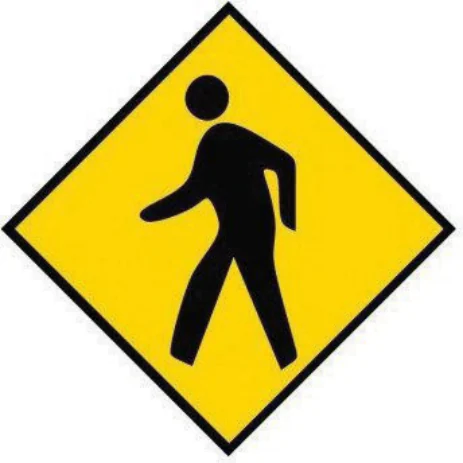
A 2-minute lesson from the Maryland course. Read the rules and examples, follow the handbook page references, and check your understanding before you move on.
Pedestrians have no protection, so the law puts the burden on drivers. Most intersections have a crosswalk even with no paint, and pedestrians who are deaf, blind or mobility impaired may need extra time.
Know the rule
Pedestrians have the right-of-way at street crossings but must obey traffic control signals.
Be especially alert for pedestrians who are deaf, blind or mobility impaired. They may have trouble seeing or hearing traffic and may need extra time to cross.
The car in the lane next to you has stopped at an unmarked crosswalk at an intersection. You can't see why. Stop too: you may not pass a vehicle stopped at a crosswalk. A pedestrian may be crossing in front of it.
Check your understanding
Read the question, decide on an answer, then open it to check the explanation. These are Roadwise study questions based on the source handbook.
When there is no traffic signal, what must you do for pedestrians in a crosswalk?
Only stop if the crosswalk is marked
Only slow down, no full stop needed
Only stop for pedestrians already halfway across
Stop for them, marked or unmarked
Answer: Stop for them, marked or unmarked
When there is no traffic signal, you must stop for pedestrians in a marked or unmarked crosswalk.