roadwise.Open study app

Maine driving lesson · Seat Belts, Air Bags and Child Safety

Seat belts and air bags

A 3-minute lesson from the Maine course. Read the rules and examples, follow the handbook page references, and check your understanding before you move on.

Read time
3 minutes
Course unit
Seat Belts, Air Bags and Child Safety
Checkpoint questions
6
Source pages
40, 41

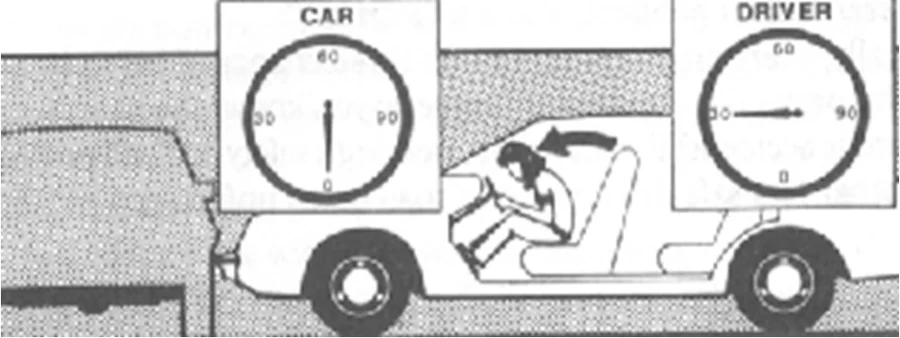
In a crash your car stops, but your body keeps moving at the speed you were going. A safety belt ties you to the car so you slow down with it, stay behind the wheel and stay inside the vehicle.

Know the rule

In Maine it is against the law to drive without wearing a safety belt. Everyone in your vehicle must have a fastened safety belt or child safety seat.

Handbook p. 40 ↗
Up to 5 times

Greater chance of surviving a crash if you stay inside your car

Handbook p. 40 ↗

Your chances of coming out of a collision alive

Your chances of coming out of a collision alive
WearingCompared with no belt
Lap belt onlyAbout twice as good
Lap belt and shoulder strapThree to four times as good
Handbook p. 40 ↗

How safety belts help you control the car:

  • They keep you from sliding around the seat in sudden stops and turns, so you stay behind the wheel
  • They slow your body down with the car
  • They keep you alert by preventing slouching and reduce the effort of staying in your seat
  • If you're hit from the side, they keep you in position to control the car
Handbook p. 40 ↗

Know the rule

Unbelted at 30 MPH, hitting the dashboard or windshield is like falling from the top of a three-story building.

Handbook p. 40 ↗
Vehicle seating position diagram
The car stops; an unbelted driver keeps going at the same speed

Know the rule

Buckle up before you start the car. There is no time to buckle up once an emergency happens.

Handbook p. 41 ↗
40–55%

How much properly used lap and shoulder belts reduce the risk of serious or fatal injury

Handbook p. 41 ↗
45,000

Approximate U.S. motor vehicle deaths each year; crashes are the primary cause of death for ages 1 to 34

Handbook p. 41 ↗

Wearing your belt correctly:

  • Shoulder harness across your shoulder and chest, snug but loose enough to fit your fist under it
  • Never put the shoulder harness under your arm or behind your back; that can cause internal injuries
  • Lap belt tight but comfortable across your lap and hips, below your stomach, resting on your hip bones
Handbook p. 41 ↗

Know the rule

Air bags inflate on frontal impact and work along with safety belts to keep your head and upper body off the wheel and dash. Always wear your belt, even with air bags.

Handbook p. 41 ↗

Put it into practice

Your new car has front and side air bags, so your passenger says a belt isn't needed. Wrong: air bags give extra protection mainly in frontal impacts, and you need the belt to get full protection in a crash.

Check your understanding

Read the question, decide on an answer, then open it to check the explanation. These are Roadwise study questions based on the source handbook.

Is it legal to drive in Maine without wearing a safety belt?
  1. No, it is against the law
  2. Yes, for trips under 1 mile
  3. Yes, on rural roads only
  4. Yes, if driving under 25 mph

Answer: No, it is against the law

Maine law makes it illegal to drive without wearing a safety belt.
Handbook p. 40 ↗
Properly worn lap and shoulder belts reduce the risk of serious or fatal injury by about how much?
  1. 40-55%
  2. 60-75%
  3. 10-20%
  4. 25-35%

Answer: 40-55%

When used properly, lap and shoulder belts can reduce the risk of serious or fatal injury by 40-55%.

Handbook p. 41 ↗
Where should the shoulder harness cross your body?
  1. Behind your back
  2. Under your arm
  3. Around your neck
  4. Across your shoulder and chest

Answer: Across your shoulder and chest

The shoulder harness should cross your shoulder and chest, never under your arm or behind your back.

Handbook p. 41 ↗
Do you still need to wear a safety belt if your vehicle has air bags?
  1. Only if a passenger is present
  2. No, air bags replace belts
  3. Yes, belts and air bags work together
  4. Only on the highway

Answer: Yes, belts and air bags work together

Safety belts should be worn even if you have air bags; they work together for protection.

Handbook p. 41 ↗
How does wearing a lap belt alone compare to wearing no belt, in terms of surviving a crash?
  1. About the same odds
  2. Five times more likely
  3. About twice as likely to survive
  4. Slightly worse odds

Answer: About twice as likely to survive

Wearing just a lap belt makes your chances of surviving a collision about twice as good.

Handbook p. 40 ↗
Wearing a safety belt can help you stay alert by preventing slouching while driving.
  1. True
  2. False

Answer: True

Safety belts help you stay alert by keeping you from slouching and reducing fatigue.

Handbook p. 40 ↗
Take the lesson checkpoint in the app

More in Seat Belts, Air Bags and Child Safety