A 3-minute lesson from the Louisiana course. Read the rules and examples, follow the handbook page references, and check your understanding before you move on.
Farm equipment, horse-drawn buggies and horseback riders share rural roads. They move much slower than you expect, often can't see or hear you, and may turn wide. Approach with patience and pass only when it's clearly safe.
Know the rule
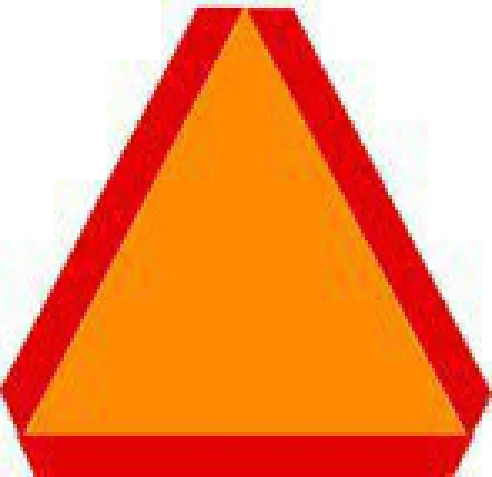
A fluorescent or reflective orange-and-red triangle on the rear of a vehicle means it travels less than 25 mph.
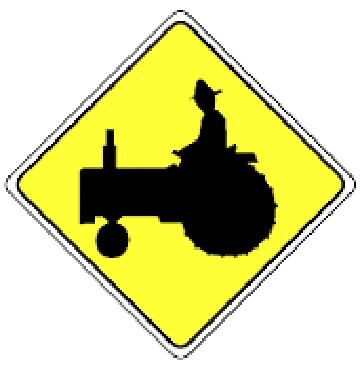
Farm machinery can be wider than a lane and usually has no turn signals. To turn right, the operator may pull wide to the left first. The operator can't hear vehicles coming.
Animal-drawn vehicles have the same rights and duties as motor vehicles. Drivers hauling hay may not see behind them; expect left turns into fields and driveways.
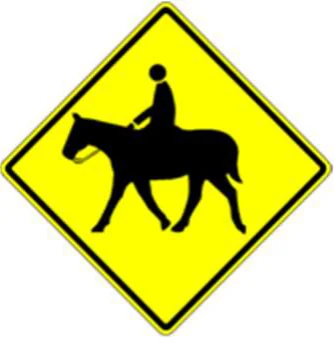
Horseback riders must ride single file near the right curb or road edge, or on a usable right shoulder, lane or path. Drive at a reasonable speed and distance away from the horse.
Know your vehicle's weight ratings (GVWR), found in the owner's manual and on the title and registration. Overloading, especially when towing, strains brakes and suspension.
You come up behind a horse-drawn buggy on a narrow road. Slow down, don't honk or rev, and pass only when it's clearly safe, leaving plenty of room in case the horse spooks or the buggy turns left.
Check your understanding
Read the question, decide on an answer, then open it to check the explanation. These are Roadwise study questions based on the source handbook.
A fluorescent orange and red triangle on the back of a vehicle indicates:
The vehicle is traveling less than 25 mph
The vehicle is carrying hazardous materials
The vehicle has an oversize load
The vehicle has broken down
Answer: The vehicle is traveling less than 25 mph
This slow-moving vehicle emblem warns other drivers the vehicle travels under 25 mph.