A 3-minute lesson from the Louisiana course. Read the rules and examples, follow the handbook page references, and check your understanding before you move on.
Trains can't swerve, and a freight train needs more than a mile to stop. Louisiana law spells out exactly where to stop at a crossing and forbids stopping on the tracks. Expect a train on any track at any time.
15-50 feet
Stop within 50 feet but no closer than 15 feet from the nearest rail
After stopping, don't cross until it's safe. Never stop on the tracks, and don't start across in a line of traffic unless you're sure you can clear the other side.
Vehicles carrying passengers for hire, school buses, trucks and vehicles carrying explosives or flammable liquids must stop at crossings. Don't pass them unless it's legal and safe.
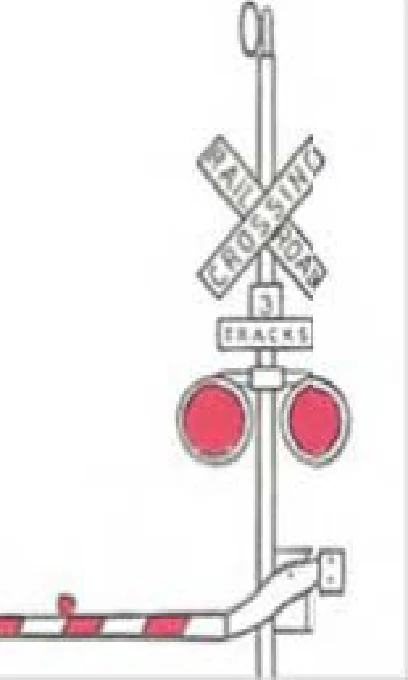
Always stop when the lights flash, and look both ways even when they don't; they may not be working. Stop before the gates lower, stay stopped until they rise, and never drive around or through a gate.
The crossing lights start flashing as you approach, and the gate is still up. Stop now, within 50 feet but no closer than 15 feet from the nearest rail, and wait until the lights stop and it's safe.
Check your understanding
Read the question, decide on an answer, then open it to check the explanation. These are Roadwise study questions based on the source handbook.
At a railroad crossing with an active warning, how close to the nearest rail must you stop?
Between 15 and 50 feet
Exactly at the rail itself
Within 10 feet only
Within 100 feet only
Answer: Between 15 and 50 feet
Louisiana law requires stopping within 50 feet but no less than 15 feet of the nearest rail.