roadwise.Open study app

Kentucky driving lesson · Sharing the Road

Pedestrians & blind pedestrians

A 4-minute lesson from the Kentucky course. Read the rules and examples, follow the handbook page references, and check your understanding before you move on.

Read time
4 minutes
Course unit
Sharing the Road
Checkpoint questions
6
Source pages
64, 65

Pedestrians are hard to see, and their intentions are hard to read. Be ready to yield even when they're not in a crosswalk—and take extra care with children and with blind pedestrians, who rely on the sound of traffic to cross safely.

As a driver you must:

  • Always be prepared to yield to pedestrians, even outside a crosswalk
  • Yield to a pedestrian in any crosswalk, marked or unmarked, including marked mid-block crosswalks
  • Yield to all pedestrians in the intersection, even when your light is green
  • Be prepared to yield to pedestrians when turning right or left on red
  • Slow down beside parked or stopped vehicles; don't pass until sure no one is crossing in front
  • Check for pedestrians before backing, especially in parking lots
Handbook p. 64 ↗

Know the rule

In playgrounds and residential areas, children may run out from between parked cars. Drive slower than the speed limit there and be ready to stop quickly.

Handbook p. 64 ↗

Know the rule

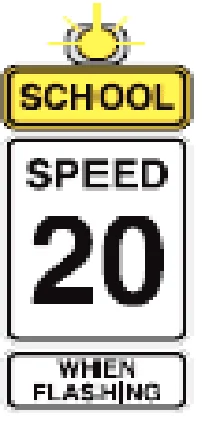
In a school zone when lights are flashing or children are present, obey the slower speed limit. At a school crossing with a traffic patrol, stop and yield if signaled to.

Handbook p. 64 ↗
School speed limit when flashing
School zone speed sign with flashing beacon

Know the rule

A pedestrian crossing anywhere other than a marked crosswalk or an unmarked crosswalk at an intersection must yield the right-of-way to all vehicles.

Handbook p. 64 ↗

Know the rule

Kentucky law requires you to yield to a blind pedestrian carrying a clearly visible white cane or accompanied by an assistance dog. Failing to yield can bring a fine of up to $250.

Handbook p. 64 ↗
5 feet

At a light or stop sign, stop no farther than this from the crosswalk (unless there's an advanced stop bar)

Handbook p. 64 ↗

Helping blind pedestrians:

  • Pull up to the crosswalk—they use the sound of your vehicle as a guide
  • Don't give verbal directions; they listen to all traffic before deciding to cross
  • Don't wait too long for them to cross
  • If the person steps back and pulls in the cane, that's a definite sign for you to go
  • Don't stop in the middle of the crosswalk—it forces them into traffic
  • Don't honk at a blind person
Handbook p. 65 ↗

Know the rule

Drivers of electric and hybrid vehicles must be extra alert: blind pedestrians may not know you're there because these vehicles are so quiet.

Handbook p. 64 ↗

Put it into practice

You're first at a red light, and a man with a white cane waits at the corner. Stop within 5 feet of the crosswalk so he can hear your car, don't call out directions or honk, and don't block the crosswalk. If he steps back and pulls in his cane, go.

Check your understanding

Read the question, decide on an answer, then open it to check the explanation. These are Roadwise study questions based on the source handbook.

You must yield to a pedestrian in a crosswalk:
  1. Even if the crosswalk is unmarked
  2. Only if the crosswalk is painted on the road
  3. Only outside of business districts
  4. Only if a crossing guard is present

Answer: Even if the crosswalk is unmarked

You must yield when a pedestrian is in a crosswalk, marked or unmarked, including mid-block crosswalks.
Handbook p. 64 ↗
When turning right or left on a red light, you must:
  1. Be prepared to yield the right of way to pedestrians
  2. Sound your horn before turning
  3. Only watch for pedestrians on your left
  4. Yield only to vehicles, not pedestrians

Answer: Be prepared to yield the right of way to pedestrians

Even when turning on red, you must be prepared to yield to pedestrians crossing.

Handbook p. 64 ↗
Every pedestrian crossing outside of a marked or unmarked crosswalk (jaywalking) must:
  1. Yield the right-of-way to all vehicles
  2. Be given the right of way regardless of location
  3. Only cross at intersections
  4. Wait for a police officer's signal

Answer: Yield the right-of-way to all vehicles

A pedestrian crossing at a point other than a crosswalk must yield the right-of-way to vehicles.

Handbook p. 64 ↗
Failing to yield the right-of-way to a blind pedestrian using a white cane can result in a fine of up to:
  1. $50
  2. $250
  3. $25
  4. $1,000

Answer: $250

Failure to yield to a blind pedestrian carrying a white cane or using a guide dog can result in a fine up to $250.

Handbook p. 64 ↗
At a stop light, how close should you stop to the crosswalk to help a blind pedestrian hear your vehicle?
  1. At least 20 feet back from the crosswalk
  2. About 10 feet back from the crosswalk
  3. As far back as possible for safety
  4. Not more than 5 feet from the crosswalk, unless there is an advance stop bar

Answer: Not more than 5 feet from the crosswalk, unless there is an advance stop bar

Don't stop more than 5 feet from the crosswalk (absent an advance stop bar) so a blind pedestrian can hear your vehicle.

Handbook p. 64 ↗
When approaching a blind pedestrian who steps back and pulls in their cane, this is a sign that you should:
  1. Honk to confirm your presence
  2. Stop immediately, since they are confused
  3. Continue only if no other traffic is present
  4. Go, since they are indicating they will wait

Answer: Go, since they are indicating they will wait

If the person steps back and pulls in the cane, that is a definite sign you should proceed.

Handbook p. 65 ↗
Take the lesson checkpoint in the app

More in Sharing the Road