roadwise.Open study app

Kentucky driving lesson · Sharing the Road

Motorcyclists

A 2-minute lesson from the Kentucky course. Read the rules and examples, follow the handbook page references, and check your understanding before you move on.

Read time
2 minutes
Course unit
Sharing the Road
Checkpoint questions
5
Source pages
67, 68

Motorcyclists have the same rights and responsibilities as other drivers, but motorcycles are small and harder to see. Look for them deliberately—in your mirrors, in your blind spots and especially before you turn left.

Sharing the road with motorcycles:

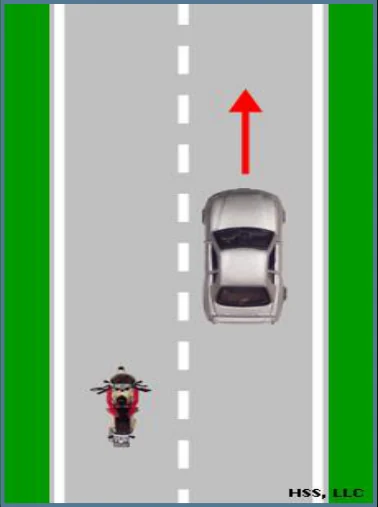
  • Give a motorcyclist a full lane width—never share the lane
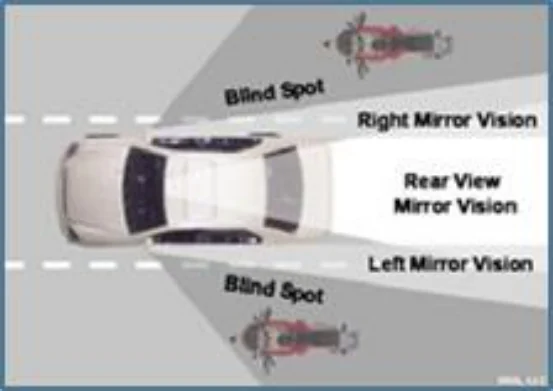
  • Check your mirrors and blind spots for motorcycles
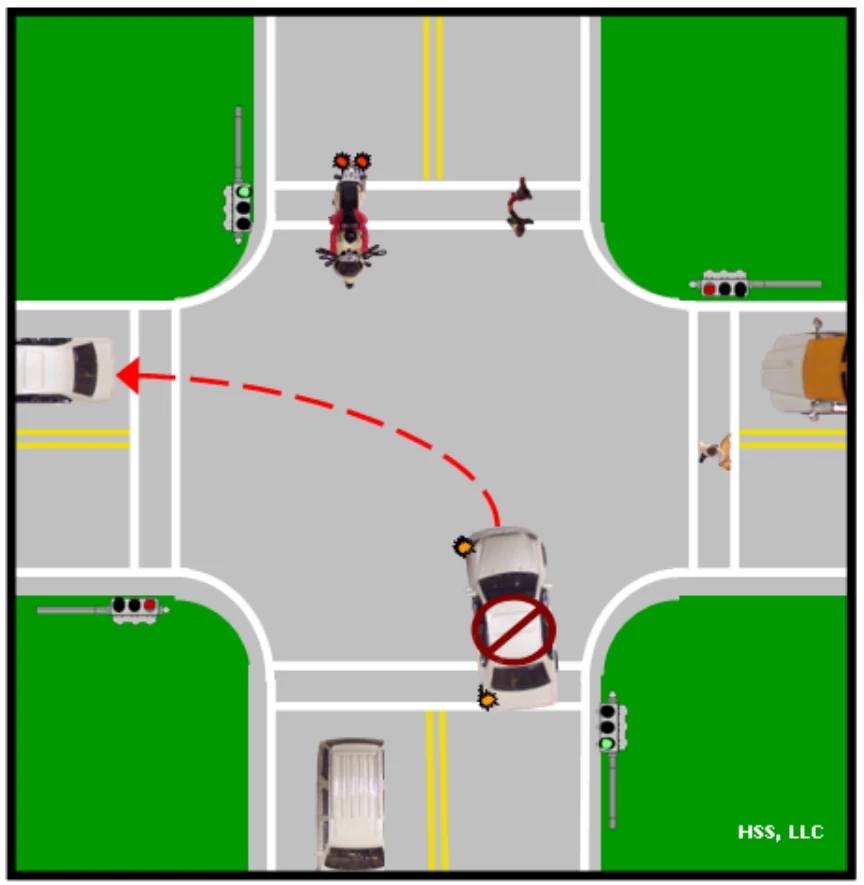
  • Before turning left, look carefully to the front and sides for motorcycles
  • A flashing signal doesn't prove a turn—motorcycle signals may not self-cancel
  • Follow at least 4 seconds behind a motorcycle, more in wet conditions
Handbook p. 67 ↗
Following distance for a motorcycle (diagram)
Motorcycles need the full lane—don't share it
Intersection turn restriction
Before turning left, check for oncoming motorcycles
4 seconds

Minimum following distance behind a motorcycle—more when wet

Handbook p. 67 ↗

Riders may suddenly change speed or lane position to avoid:

  • Potholes and gravel
  • Wet or slippery surfaces
  • Pavement seams
  • Railroad crossings
  • Grooved pavement
Handbook p. 68 ↗

Know the rule

Keep in mind that scooters and mopeds travel at much lower speeds than motorcycles.

Handbook p. 68 ↗
Mirror and blind spot zones
Motorcycles can hide in a car's blind spots

Put it into practice

Waiting to turn left, you see an oncoming motorcycle with its right signal flashing. Don't turn in front of it—its signal may not have canceled. Wait until you're sure the rider is actually turning.

Check your understanding

Read the question, decide on an answer, then open it to check the explanation. These are Roadwise study questions based on the source handbook.

When sharing the road with a motorcycle, you should:
  1. Pass only from the right side
  2. Give it a full lane; never share
  3. Follow closely to protect it from other traffic
  4. Share the lane if traffic is heavy

Answer: Give it a full lane; never share

Motorcyclists need a full lane width to react to traffic; never share a lane with a motorcycle.
Handbook p. 67 ↗
If you see a motorcycle's turn signal flashing, you should:
  1. Assume they will turn immediately
  2. Make sure the rider is really turning
  3. Pull out ahead of them right away
  4. Treat it as a hazard warning

Answer: Make sure the rider is really turning

Motorcycle signals may not self-cancel, so don't assume a flashing signal means an immediate turn.

Handbook p. 67 ↗
The minimum recommended following distance behind a motorcyclist is:
  1. 10 seconds
  2. 2 seconds, always
  3. 1 second
  4. 4 seconds, or more in wet conditions

Answer: 4 seconds, or more in wet conditions

Allow a minimum 4-second following distance behind a motorcyclist, more in wet conditions.

Handbook p. 67 ↗
Motorcycle operators have the same rights and responsibilities as other drivers on the road.
  1. True
  2. False

Answer: True

The manual states motorcyclists have the same rights and responsibilities as other drivers.

Handbook p. 67 ↗
Motorcycle riders may suddenly change speed or lane position to avoid hazards such as:
  1. Changes in the posted speed limit
  2. Potholes, gravel, or grooved pavement
  3. Vehicles signaling a turn
  4. Other motorcycles only

Answer: Potholes, gravel, or grooved pavement

Riders may need to react suddenly to hazards like potholes, gravel, pavement seams, or grooved pavement.

Handbook p. 68 ↗
Take the lesson checkpoint in the app

More in Sharing the Road