A 4-minute lesson from the Kansas course. Read the rules and examples, follow the handbook page references, and check your understanding before you move on.
On the road a bicycle is a vehicle, with the same rights, privileges and responsibilities as you. Cyclists are easy to miss and skill levels vary, so be ready for sudden moves and give them room.
Rules for bicyclists:
Ride on the right side of the roadway and obey all signs and signals
Use hand signals to show what you plan to do
May use the full lane to avoid debris, cracks, parked vehicles or other hazards
May use the middle and left side when going straight through an intersection or turning left
May ride two abreast in a lane, or single file when the situation calls for it
Must use a headlight at dusk; a taillight is highly recommended
Wear brightly colored clothing and reflectors, and keep the bike in good repair
If a traffic signal won't respond to a bicycle, after a reasonable wait the cyclist may cross, as long as they don't impede cross traffic or cause a crash.
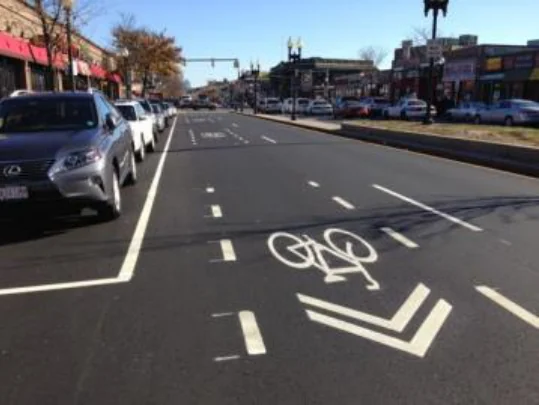
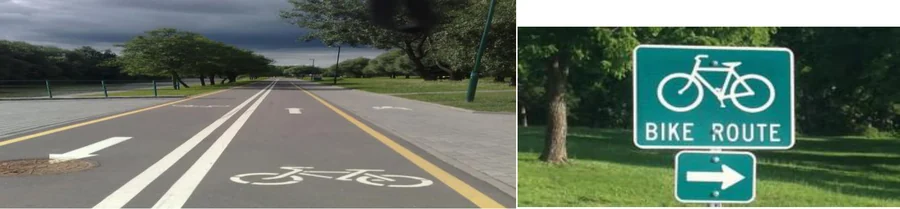
Don't stop, park or drive in a bike lane or path unless entering or leaving an alley or driveway, performing official duties, directed by police, or in an emergency.
Before opening your door on the street, check for bicyclists. The 'Dutch Reach' (opening with your right hand) turns your body so you can see traffic coming from behind.
You're about to turn right at a corner and a cyclist is riding in the bike lane beside you. Don't speed past and cut in front. Slow down, let the cyclist clear the intersection, then make your turn.
Check your understanding
Read the question, decide on an answer, then open it to check the explanation. These are Roadwise study questions based on the source handbook.
On Kansas roadways, bicyclists are legally considered:
Pedestrians, subject to pedestrian laws
Vehicles only when riding in a bike lane
Vehicles, but with fewer rights than cars
Vehicles, with the same rights as motor vehicles
Answer: Vehicles, with the same rights as motor vehicles
Bicyclists on roadways are treated as vehicles with equivalent rights, privileges, and responsibilities to motorists.
Under Kansas's 'Dead Red Law,' a bicyclist at a signal that won't detect their bike may:
Cross immediately regardless of other traffic
Only cross if a police officer is present
Cross after a reasonable wait, without impeding cross traffic
Never cross until a vehicle arrives to trigger the signal
Answer: Cross after a reasonable wait, without impeding cross traffic
The Dead Red Law lets a bicyclist proceed through an unresponsive signal after a reasonable wait, as long as they don't impede or endanger cross traffic.