Roadwise States Indiana Driving lessons Work zones & flagger signals Indiana driving lesson · Rural Roads, Interstates & Railroads
Work zones & flagger signals A 3-minute lesson from the Indiana course. Read the rules and examples, follow the handbook page references, and check your understanding before you move on.
Read time 3 minutes
Course unit Rural Roads, Interstates & Railroads
Checkpoint questions 6
Source pages 52, 53, 46 Work zones are dangerous for drivers and workers alike. Arrow boards, flaggers, and signs tell you exactly what to do, so watch for them and follow them.
Know the rule
Flashing arrow boards often mark a lane closure or crossover. Lane markings, traffic cones, barrels, or barricades outline the path you must follow.
Handbook p. 52 ↗ Know the rule
An arrow board that isn't pointing either way is a signal to use caution. It does not require you to move to another lane.
Handbook p. 52 ↗ Arrow board: move or merge right or left Arrow board: caution only Know the rule
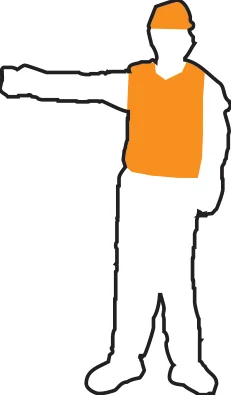
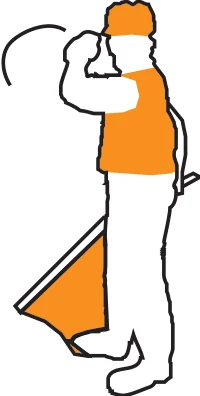
You must stop when a flagger holds a fluorescent orange/red flag horizontally into your lane. Proceed at reduced speed only when the flagger directs you.
Handbook p. 52 ↗ Know the rule
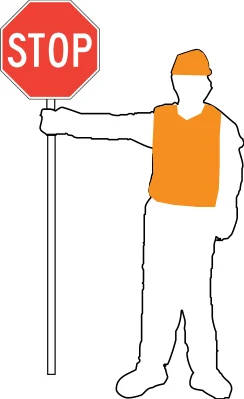
If a flagger uses a sign paddle, stop or proceed slowly according to the STOP or SLOW message shown.
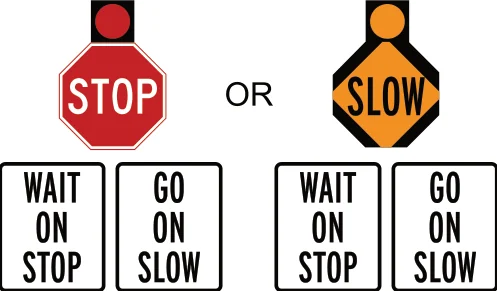
Handbook p. 52 ↗ Flagger: stop (flag extended) Flagger: slow Flagger: proceed Automated Flagger Assistance Device A device that lets flaggers stand out of the lane. It shows a STOP or SLOW sign like a hand-held paddle, or uses red and yellow lights.
Handbook p. 52 ↗ Automated Flagger Assistance Device Work zone safety tips: Stay alert for reduced speed limits, narrow driving lanes, and highway workers Pay attention: work zone signs state exactly what to expect ahead Merge early, at first sight of the signs, so traffic flows more smoothly Slow down: speed into a work zone and you'll meet slowed or stopped traffic within seconds Don't tailgate; keep a safe distance on all sides Minimize distractions, plan ahead, expect delays, and consider alternate routes Handbook p. 52 ↗ Zipper merging Late merging toward the lane closure, used at some locations to reduce the length of a traffic back-up. Signs are posted where it applies.
Handbook p. 53 ↗ 10 mph Work site speed limits are always at least this far below the area's maximum
Handbook p. 46 ↗ Put it into practice
A flagger turns the paddle to STOP. Stop and wait. When the flagger turns it to SLOW, move ahead slowly through the work zone.
A useful reminder Merge early, unless signs tell you to zipper merge.
Check your understanding Read the question, decide on an answer, then open it to check the explanation. These are Roadwise study questions based on the source handbook.
What must you do when a flagger extends a fluorescent orange/red flag horizontally into traffic? Stop Slow down but continue through Proceed slowly with caution Merge left immediately Answer: Stop
You must stop when a flagger extends a fluorescent orange/red flag in a horizontal position into the line of traffic.
Handbook p. 52 ↗ When may you proceed at a work zone controlled by a flagger? When the vehicle ahead of you proceeds Only at reduced speed when directed by the flagger At normal speed once the flag is lowered Only if no other vehicles are ahead of you Answer: Only at reduced speed when directed by the flagger
You may proceed at a reduced speed only when directed to by the flagger.
Handbook p. 52 ↗ What does a flashing arrow board that shows no direction mean? Merge into the left lane Merge into the right lane Use caution; no lane change is required The work zone has ended Answer: Use caution; no lane change is required
A flashing arrow board not indicating a direction is a signal to use caution but does not require moving lanes.
Handbook p. 52 ↗ What is generally the best practice when approaching a work zone lane closure? Wait until the last possible moment to merge Speed up to pass other vehicles before merging Stop completely before the merge point Merge early, before reaching the closure Answer: Merge early, before reaching the closure
Merging early, at first sight of signs, generally lets traffic flow more smoothly.
Handbook p. 52 ↗ What is 'zipper merging' used for in a work zone? Reducing the length of a traffic back-up Letting trucks use a separate lane Moving traffic onto the shoulder Merging at first sight of the signs Answer: Reducing the length of a traffic back-up
Late or zipper merging, where traffic merges toward the lane closure, may be used to reduce the length of a traffic back-up.
Handbook p. 53 ↗ A flashing arrow board with no direction shown always requires an immediate lane change. True False Answer: False
A flashing arrow board not indicating a direction is only a caution signal and does not require a lane change.
Handbook p. 52 ↗ Previous lesson Driving on interstate highways Next lesson Railroad crossings: signs & stopping rules More in Rural Roads, Interstates & Railroads About the source Roadwise’s Indiana course uses the driver handbook edition supplied with this study pack. This lesson cites source pages 52, 53, 46. The linked PDF is a third-party mirror of the handbook, rather than a government-hosted page.
Open the handbook source PDF · View the source edition
For current application requirements, fees, appointments, and the format that applies to your age or license type, check Indiana’s BMV. Roadwise provides study material and does not issue permits or licenses.