roadwise.Open study app

Indiana driving lesson · Rural Roads, Interstates & Railroads

Driving on rural roads

A 3-minute lesson from the Indiana course. Read the rules and examples, follow the handbook page references, and check your understanding before you move on.

Read time
3 minutes
Course unit
Rural Roads, Interstates & Railroads
Checkpoint questions
6
Source pages
51, 47, 35

Rural roads can be more hazardous than interstates or city streets. They may be narrower, and their surfaces may be paved asphalt, dirt, or gravel. Each brings its own traps.

Know the rule

Stopping and turning are harder on loose gravel because traction is reduced, and skids can happen. Slow down earlier to avoid skidding through a turn or stop.

Handbook p. 51 ↗

Know the rule

In dry periods, dirt roads can be very dusty, and the dust can reduce visibility. Use your low beam headlights so other drivers can see you.

Handbook p. 51 ↗

Know the rule

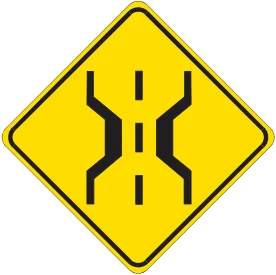
Use caution when approaching or passing vehicles on narrow roads or bridges. Watch for Narrow Bridge signs and be ready to stop for other vehicles.

Handbook p. 51 ↗
Narrow bridge
Narrow Bridge warning sign

Know the rule

Before the crest of a steep hill, slow down, move to the right side of the road, and watch for oncoming vehicles. Never try to pass when approaching a steep hill or crest.

Handbook p. 51 ↗

Know the rule

Cultivated crops such as corn can block your view of vehicles approaching intersections and of oncoming vehicles on curvy roads.

Handbook p. 51 ↗

Know the rule

Rollovers are more likely on undivided two-way roads or divided roads with no barriers. A vehicle that leaves a rural road can roll if it strikes a ditch or embankment or is tripped by soft soil.

Handbook p. 47 ↗
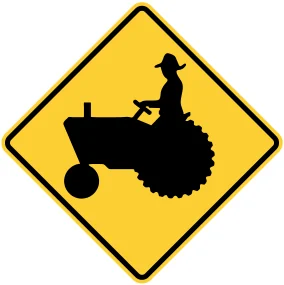
Farm equipment
Farm Machinery warning sign
25 mph

Top speed of a vehicle displaying the slow-moving vehicle emblem

Handbook p. 35 ↗

Put it into practice

You're on a two-lane county road lined with tall corn, nearing a crossroad with no signal. The crops can hide cross traffic, so slow down and look carefully before you reach the intersection.

Check your understanding

Read the question, decide on an answer, then open it to check the explanation. These are Roadwise study questions based on the source handbook.

Why is stopping and turning more difficult on loose gravel roads?
  1. Gravel causes brakes to overheat
  2. Gravel wears tire tread down quickly
  3. Traction is reduced, which can cause skidding
  4. Gravel roads have steeper crowns

Answer: Traction is reduced, which can cause skidding

Stopping and turning is more difficult on loose gravel because your traction is reduced.
Handbook p. 51 ↗
What headlight setting should you use on a dusty dirt road?
  1. Low beam headlights
  2. High beam headlights
  3. Parking lights only
  4. No headlights are needed in daylight

Answer: Low beam headlights

Use your low beam headlights to make yourself more visible to other drivers on dusty dirt roads.

Handbook p. 51 ↗
When should you never attempt to pass another vehicle on a rural road?
  1. When driving behind a slow farm tractor
  2. When approaching a steep hill or crest
  3. When on a wide, straight paved stretch
  4. When the center line is broken yellow

Answer: When approaching a steep hill or crest

Never attempt to pass another vehicle when approaching a steep hill or crest.

Handbook p. 51 ↗
What can reduce your ability to see vehicles at intersections on rural roads?
  1. Overhead streetlights along the shoulder
  2. Painted lane markings on the pavement
  3. Cultivated crops, such as tall corn
  4. Reflective guardrails along the road

Answer: Cultivated crops, such as tall corn

Cultivated crops such as corn may reduce your ability to see vehicles approaching intersections and on curvy roads.

Handbook p. 51 ↗
What should you always watch for on narrow rural roads and bridges?
  1. Narrow bridge signs, and be ready to stop
  2. Highway rest area exit signs
  3. Speed advisory signs for exits
  4. Historical marker signs

Answer: Narrow bridge signs, and be ready to stop

Always watch for narrow bridge signs and be prepared to stop for other vehicles.

Handbook p. 51 ↗
What can reduce visibility on dry, dusty dirt roads?
  1. Morning dew on the pavement
  2. Dust kicked up by passing traffic
  3. Reflective glare from streetlights
  4. Standing water after rainfall

Answer: Dust kicked up by passing traffic

During dry periods, dirt roads may be very dusty, and the dust can reduce your visibility.

Handbook p. 51 ↗
Take the lesson checkpoint in the app

More in Rural Roads, Interstates & Railroads