Roadwise States Indiana Driving lessons Railroad crossings: signs & stopping rules Indiana driving lesson · Rural Roads, Interstates & Railroads
Railroad crossings: signs & stopping rules A 3-minute lesson from the Indiana course. Read the rules and examples, follow the handbook page references, and check your understanding before you move on.
Read time 3 minutes
Course unit Rural Roads, Interstates & Railroads
Checkpoint questions 6
Source pages 53, 54, 57 Trains can't swerve and need a long distance to stop. Crossings use signs, signals, and pavement markings, but not every crossing has every device, so look and listen yourself.
Know the rule
Certain vehicles must always stop at railroad crossings no closer than 15 feet and no farther than 50 feet from the nearest rail.
Handbook p. 53 ↗ 15–50 feet Required stopping zone from the nearest rail for vehicles that must always stop
Handbook p. 53 ↗ Vehicles that must always stop at railroad crossings: All vehicles carrying passengers for hire All school buses All vehicles carrying explosives or flammable liquids Handbook p. 53 ↗ Know the rule
This stop is not required at abandoned tracks where proper signs are posted, or where the tracks across the road have been removed.
Handbook p. 53 ↗ Know the rule
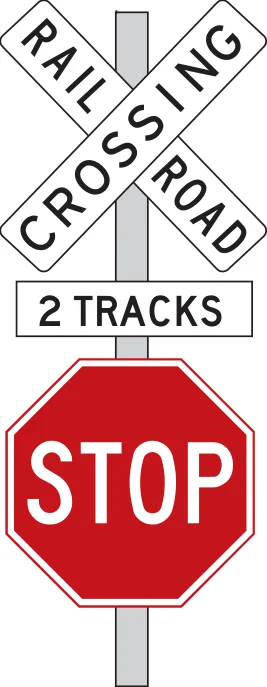
Never assume a train isn't coming just because there is only a stop sign.
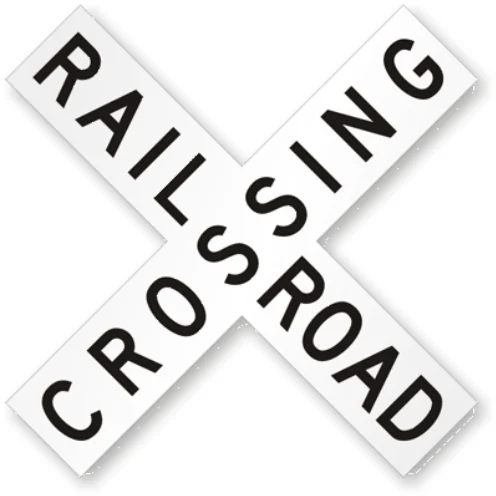
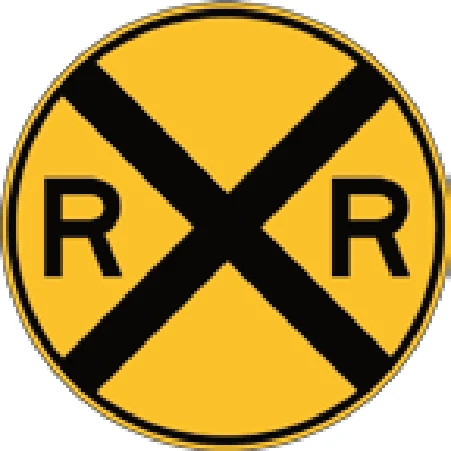
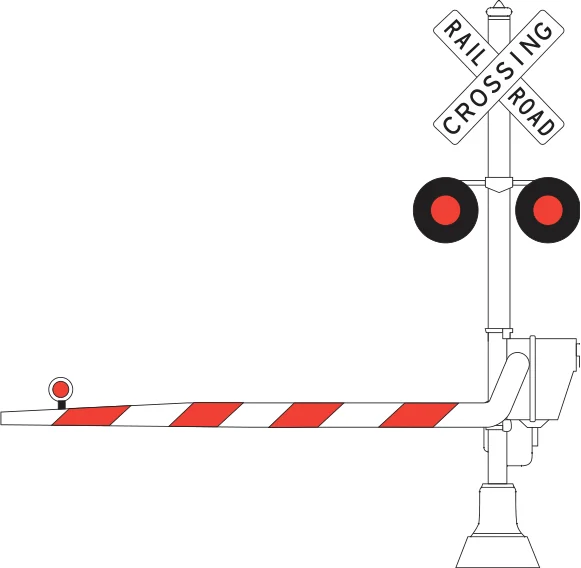
Handbook p. 53 ↗ Crossbuck Crossbuck with stop sign Railroad advance warning sign Railroad crossing gate Know the rule
It is illegal to drive around a crossing gate that is down.
Handbook p. 53 ↗ Know the rule
Do not pass another vehicle within 100 feet of a railroad crossing.
Handbook p. 54 ↗ Know the rule
School buses stop at railroad crossings, and rear-end collisions with buses stopped at crossings have increased in recent years.
Handbook p. 57 ↗ Put it into practice
You come to a crossing marked only by a crossbuck, with no train in sight or sound. Treat it like a yield sign: slow down, look both ways, and be ready to stop. If a train is approaching, you must stop.
A useful reminder Crossbuck alone = yield. Crossbuck + stop sign = stop. Lights, bells, or gates = stop and wait.
Check your understanding Read the question, decide on an answer, then open it to check the explanation. These are Roadwise study questions based on the source handbook.
Certain vehicles must stop within what distance range of a railroad crossing? 5 to 25 feet from the nearest rail 15 to 50 feet from the nearest rail 50 to 100 feet from the nearest rail 10 to 30 feet from the nearest rail Answer: 15 to 50 feet from the nearest rail
Vehicles required to stop must do so not closer than 15 feet or farther than 50 feet from the nearest rail.
Handbook p. 53 ↗ How should you treat a crossbuck sign displayed alone at a railroad crossing? Like a mandatory stop sign Like a speed advisory sign Like a yield sign Like a no-passing zone sign Answer: Like a yield sign
A crossbuck alone should be treated as a yield sign; the decision to stop or cross is yours.
Handbook p. 53 ↗ What must you do when a crossbuck is displayed together with a stop sign? Slow down and yield, as with a crossbuck alone Stop only if you actually see a train Stop only when the lights are flashing Stop completely, then confirm no train is coming Answer: Stop completely, then confirm no train is coming
When a crossbuck is displayed with a stop sign, you must stop completely and confirm no train is approaching.
Handbook p. 53 ↗ Is it legal to drive around a lowered railroad crossing gate? No, it is illegal Yes, if no train is visible Yes, if the lights have stopped flashing Yes, if the gate has been down a long time Answer: No, it is illegal
It is illegal to drive around a crossing gate that is down.
Handbook p. 53 ↗ A crossbuck displayed alone at a crossing legally requires a full stop at all times. True False Answer: False
A crossbuck displayed alone should be treated like a yield sign; you must stop only if a train is approaching.
Handbook p. 53 ↗ Besides school buses, which vehicles must always stop at railroad crossings? Vehicles towing a small utility trailer Vehicles over 26,000 pounds Vehicles carrying explosives or flammable liquids Vehicles carrying farm equipment Answer: Vehicles carrying explosives or flammable liquids
Vehicles carrying explosives or flammable liquids are among those required to always stop at railroad crossings.
Handbook p. 53 ↗ Previous lesson Work zones & flagger signals Next lesson Railroad safety & emergencies More in Rural Roads, Interstates & Railroads About the source Roadwise’s Indiana course uses the driver handbook edition supplied with this study pack. This lesson cites source pages 53, 54, 57. The linked PDF is a third-party mirror of the handbook, rather than a government-hosted page.
Open the handbook source PDF · View the source edition
For current application requirements, fees, appointments, and the format that applies to your age or license type, check Indiana’s BMV. Roadwise provides study material and does not issue permits or licenses.