A 3-minute lesson from the Illinois course. Read the rules and examples, follow the handbook page references, and check your understanding before you move on.
Line color tells direction: white lines separate traffic going the same way, and yellow lines separate traffic going opposite ways. Solid lines restrict you, and broken lines allow crossing.
Know the rule
Edge lines: solid white lines mark the right edge of the roadway. Solid yellow lines mark the left edge of divided streets or roadways.
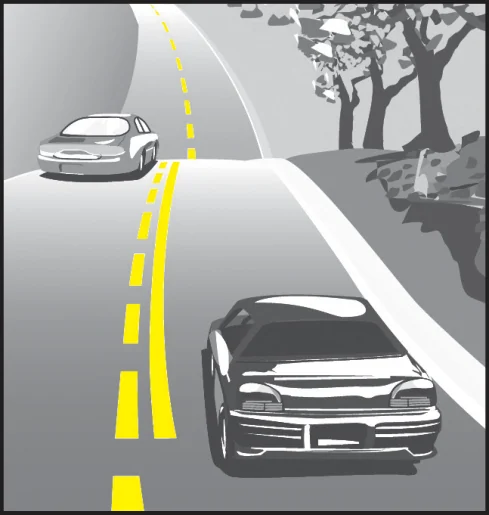
A solid yellow no-passing line on your side means you may not pass. You may cross it to finish a pass you started before the no-passing zone began, or to turn left into or from an alley, private road or driveway.
White crosswalk lines are painted across the whole pavement width, sometimes filled with white diagonal lines. Pedestrians in crosswalks have the right of way.
You're on a two-lane road with a solid yellow line on your side and a broken one on the other. The oncoming driver may pass; you may not, unless you're finishing a pass started before the solid line began.
Check your understanding
Read the question, decide on an answer, then open it to check the explanation. These are Roadwise study questions based on the source handbook.
What do broken white lines indicate?
The right edge of the roadway
Same-direction lanes; crossing allowed to change lanes
Opposite-direction lanes; passing allowed
Same-direction lanes; crossing is prohibited
Answer: Same-direction lanes; crossing allowed to change lanes
Broken white lines separate same-direction lanes and may be crossed.