A 3-minute lesson from the Florida course. Read the rules and examples, follow the handbook page references, and check your understanding before you move on.
Not every signal cycles through red, yellow and green. Flashing lights, lane-control signals over the road, and ramp meters each have their own meaning. A signal that's completely dark has a rule of its own.
Know the rule
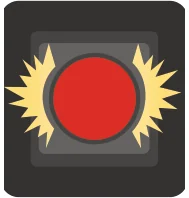
Flashing red: used at dangerous intersections. Treat it like a stop sign: stop, then go when it's safe.
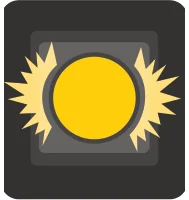
Flashing yellow: used at or just before dangerous intersections, or to call attention to a warning such as a school crossing or sharp curve. Proceed with caution.
A storm knocks out power and the traffic lights at a busy corner are dark. Stop as you would at a four-way stop, go in the order of arrival, and yield to the car on your right if you both arrive together.
Check your understanding
Read the question, decide on an answer, then open it to check the explanation. These are Roadwise study questions based on the source handbook.
If a traffic signal is out of order and no officer is present, how should you treat the intersection?
Wait for the light to start working again
As a four-way stop sign
Drive through without stopping
As a yield sign only
Answer: As a four-way stop sign
If a traffic signal is out of order and law enforcement is not present, treat the intersection as a four-way stop sign.