District of Columbia driving lesson · Sharing the Road
HAWK signals & flashing crosswalk beacons
A 3-minute lesson from the District of Columbia course. Read the rules and examples, follow the handbook page references, and check your understanding before you move on.
DC uses special pedestrian-activated devices at busy crossings. They look different from normal traffic lights, but the message is the same: when they're activated, stop for people crossing.
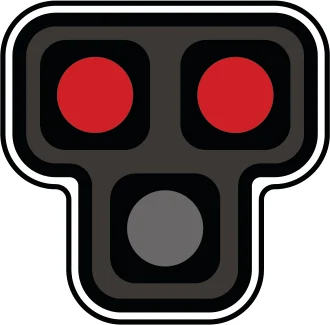
HAWK signal
High-Intensity Activated crossWalk signal-beacon, also called a Pedestrian Hybrid Beacon. It stops traffic with a red signal so pedestrians can cross on a WALK signal.
At certain locations the HAWK signal automatically detects pedestrians waiting to cross and activates itself. HAWK signals can be part of the District's coordinated signal system.
HAWK signals usually have Accessible Pedestrian Signal (APS) equipment: an audible message and a vibrating arrow button announce when the WALK signal is on.
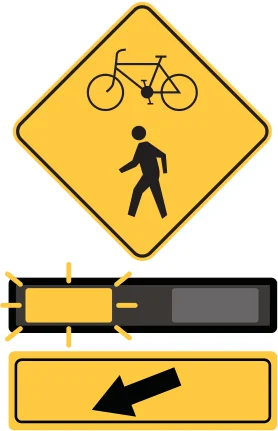
Rectangular Rapid Flashing Beacon: a pedestrian-activated device used with marked crosswalks, placed on both sides of the crosswalk below the pedestrian crossing sign and above the arrow.
Pedestrians activate an RRFB by push button or an automated detection system. Its yellow lights flash at high frequency long enough for pedestrians to cross. Drivers should come to a full and complete stop for pedestrians crossing.
RRFB: flashing yellow beacon under a bicycle/pedestrian crossing sign
Put it into practice
Yellow lights start flashing rapidly beside a crosswalk sign as you approach. That's an RRFB: someone has pushed the button to cross. Come to a full and complete stop and let them cross.
Check your understanding
Read the question, decide on an answer, then open it to check the explanation. These are Roadwise study questions based on the source handbook.
What is a HAWK signal designed to help with?
Warning drivers of a railroad crossing
Directing truck traffic through work zones
Helping pedestrians cross busy streets
Controlling reversible traffic lanes
Answer: Helping pedestrians cross busy streets
A HAWK (High-Intensity Activated crossWalk) signal is a pedestrian-activated beacon that stops traffic to let people cross.