A 3-minute lesson from the Delaware course. Read the rules and examples, follow the handbook page references, and check your understanding before you move on.
Four rules unlock every traffic signal: red means stop, yellow means prepare to stop, green means proceed with caution, and arrows apply only to the direction they point. Round lights apply to all directions.
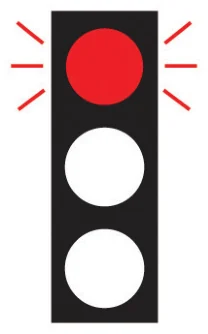
Steady red light
Know the rule
Steady red: stop at the stop line; if there's none, before the crosswalk; if there's none, before entering the intersection.
Right turns on red are allowed after a full stop unless a sign prohibits them or a steady red arrow is shown. Left turns on red are allowed after a full stop only from a one-way street onto another one-way street, with the same exceptions.
Steady yellow: the signal is changing from green to red—prepare to stop. If you're too close to stop safely, continue through the intersection with care.
Steady green: go straight or turn when safe, unless a sign or signal prohibits the turn. Yield to pedestrians and vehicles already in the intersection or adjacent crosswalk.
Delaware's traffic-camera program at busy intersections: drivers who run red lights are photographed, their tags recorded, and citations mailed automatically.
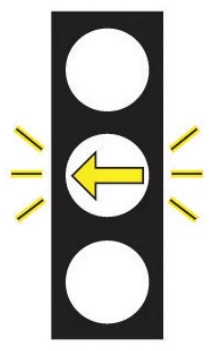
You're first in the left-turn lane facing a flashing yellow arrow, and oncoming cars keep coming. Wait in position. Turn only when there's a safe gap in oncoming traffic and no pedestrians in the crosswalk.
Check your understanding
Read the question, decide on an answer, then open it to check the explanation. These are Roadwise study questions based on the source handbook.
What does a steady yellow traffic light mean?
Speed up to clear the intersection quickly
The signal is changing; prepare to stop
Stop only if a pedestrian is present
Proceed with caution in any direction
Answer: The signal is changing; prepare to stop
A steady yellow light means the signal is changing from green to red, so you should prepare to stop.