A 3-minute lesson from the Alaska course. Read the rules and examples, follow the handbook page references, and check your understanding before you move on.
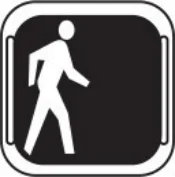
Pedestrian signals tell walkers when they may start across; drivers need to know them too, so you can expect who will be in the crosswalk. Lane-control signals above reversible lanes tell you which lanes you may use right now.
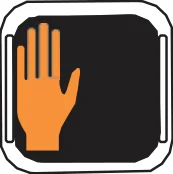
Steady upraised hand
Know the rule
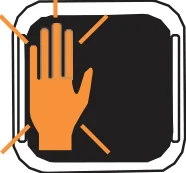
Steady upraised hand (or steady DON'T WALK): pedestrians may not leave the sidewalk or enter the roadway. Anyone already crossing should (quickly) continue across.
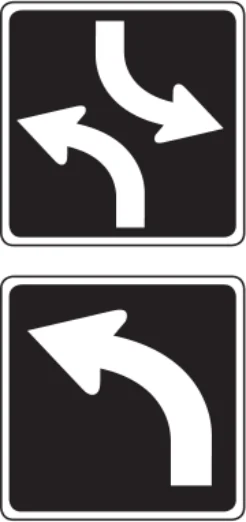
Two-way left turn arrows (top) and one-way left turn arrow (bottom)
Know the rule
Two-way left turn lane: opposing traffic may also use it to turn left. One-way left turn lane: opposing traffic may not. In both, yield to oncoming traffic and pedestrians while turning.
A yellow X lights up over the reversible lane you're driving in. Signal and move safely out of that lane; a red X is about to appear and opposing traffic will soon use it.
Check your understanding
Read the question, decide on an answer, then open it to check the explanation. These are Roadwise study questions based on the source handbook.
What does a steady red X above a lane mean?
The lane is open for travel in your direction
The lane is closed to all traffic, including opposing
Don't use that lane; opposing traffic may use it
It's a reversible lane open only at night
Answer: Don't use that lane; opposing traffic may use it
A steady red X means the lane is off-limits to you, though opposing traffic may use it.