A 3-minute lesson from the Alaska course. Read the rules and examples, follow the handbook page references, and check your understanding before you move on.
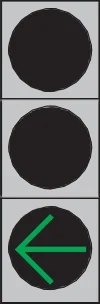
A steady light tells everyone at the intersection what to do. Balls apply to the whole intersection; arrows apply only to the movement they point to. Green never means the way is clear. You still yield.
Steady red ball
Know the rule
Red ball: stop behind the crosswalk or stop line, or if there is none, before entering the intersection. You may turn right only after a full stop, when it is safe, and if no "No turn on red" sign is posted.
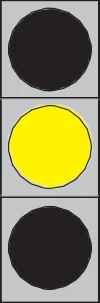
Yellow ball: a red light is about to appear. Stop unless you're already in the intersection or too close to stop safely. If it turns yellow as you enter, proceed with extreme caution.
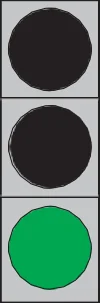
Green ball: go if the intersection is clear and make any legal move not prohibited. Yield to pedestrians and vehicles still in or entering the intersection with the right-of-way.
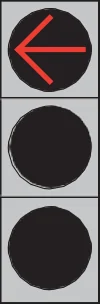
Red arrow: don't make the movement the arrow shows. Stop behind the crosswalk or stop line; no turns until the arrow changes to green or flashing yellow.
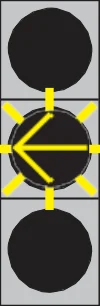
Yellow arrow: a red light is about to appear. Stop that movement unless you're already in the intersection or too close to stop safely; then finish the turn.
Your light turns green as a pedestrian is still finishing her crossing in front of you. Wait. A green light doesn't let you go until pedestrians and vehicles already in the intersection clear.
Check your understanding
Read the question, decide on an answer, then open it to check the explanation. These are Roadwise study questions based on the source handbook.
What must you do at a steady red traffic light (red ball)?
Stop behind the crosswalk or stop line
Slow down and proceed with caution
Stop only if other vehicles are present
Come to a rolling stop and continue
Answer: Stop behind the crosswalk or stop line
A steady red ball requires stopping behind the crosswalk or stop line.