Roadwise States Alaska Driving lessons Work zones & flaggers Alaska driving lesson · Signs, Signals & Pavement Markings
Work zones & flaggers A 3-minute lesson from the Alaska course. Read the rules and examples, follow the handbook page references, and check your understanding before you move on.
Read time 3 minutes
Course unit Signs, Signals & Pavement Markings
Checkpoint questions 4
Source pages 31, 44, 46, 47, 57 Work zones change the road without warning: lanes close, workers step out, traffic stops. Orange means construction, and in a work zone the flagger's directions outrank every sign and signal.
Know the rule
Orange flags and signs indicate a "high hazard area" (maintenance and construction).
Handbook p. 31 ↗ Know the rule
Construction and maintenance signs are black on orange. They mark work in the road and temporary conditions; adjust your speed and prepare for special conditions.
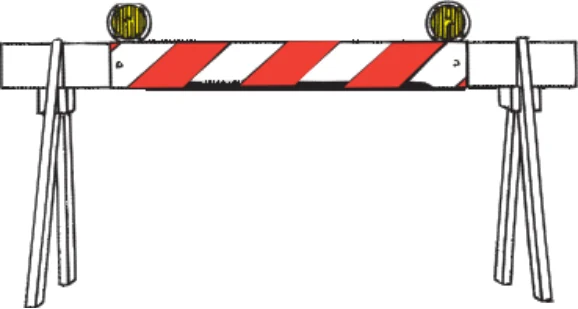
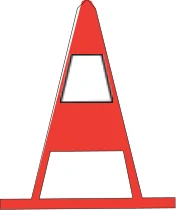
Handbook p. 44 ↗ Devices that guide you through work zones: Barricades, vertical panels, cones, tubes and drums; at night they often have flashing or steady lights Large flashing or sequencing arrow panels, used day and night Handbook p. 47 ↗ Barricade with warning lights Traffic cone Flashing arrow panel Know the rule
Arrow panels guide drivers into certain lanes and tell them part of the road ahead is closed.
Handbook p. 47 ↗ Know the rule
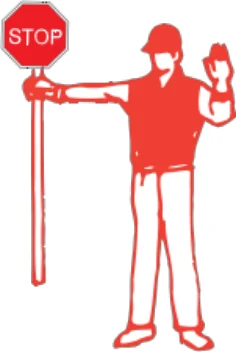
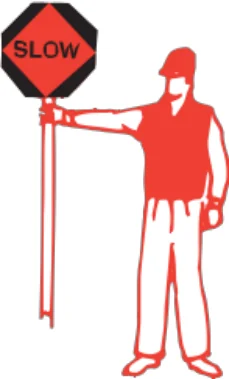
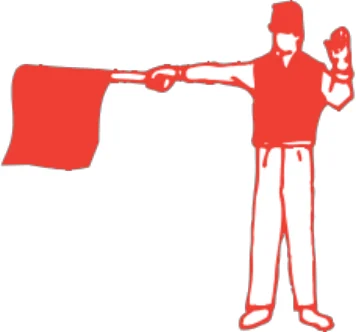
Flag persons stop, slow, or guide traffic through work zones. They usually wear orange vests, shirts or jackets and use red flags or STOP/SLOW paddles.
Handbook p. 47 ↗ Flagger with STOP paddle: traffic stop Flagger with SLOW paddle: traffic proceed Flagger with red flag: traffic stop Know the rule
You must follow the directions of a police officer, fireperson, or authorized flag person regardless of signs or signals.
Handbook p. 57 ↗ 500 feet Distance to the construction area on a "construction area ahead" warning sign
Handbook p. 46 ↗ Work-zone signs also tell you to: Prepare to stop for a flagger ahead Be alert for a crew working on or next to the roadway Follow the detour to the right in front of the sign Handbook p. 46 ↗ Put it into practice
A flagger holds up a STOP paddle, but the traffic light beyond the work zone is green. Stop. A flag person's directions take priority over the signal.
Check your understanding Read the question, decide on an answer, then open it to check the explanation. These are Roadwise study questions based on the source handbook.
What colors are used for construction and maintenance signs? Black on yellow White on green Red and white Black on orange Answer: Black on orange
Construction and maintenance signs use black on an orange background.
Handbook p. 44 ↗ You must follow the directions of a police officer, fire officer, or authorized flag person over signs or signals in what circumstance? Only when the signal is broken Always, regardless of what the signs or signals show Only during a declared emergency Only if you have already stopped Answer: Always, regardless of what the signs or signals show
You must always follow the directions of an officer or authorized flag person over signs or signals.
Handbook p. 57 ↗ In highway work zones, what do flag persons generally use to direct traffic? Green flags or GO/WAIT paddles Red flags or STOP/SLOW paddles Yellow flags or hand signals only Orange cones held overhead Answer: Red flags or STOP/SLOW paddles
Flag persons usually wear orange vests, shirts or jackets and use red flags or stop/slow paddles.
Handbook p. 47 ↗ According to the handbook's sign examples, a "construction area ahead" sign warns of a work area about how far ahead? 100 feet 1,000 feet 1,500 feet 500 feet Answer: 500 feet
The handbook describes this sign as meaning adjust your driving for a construction area 500 feet ahead.
Handbook p. 46 ↗ Previous lesson What common signs tell you Next lesson Traffic lights & arrows More in Signs, Signals & Pavement Markings About the source Roadwise’s Alaska course uses the driver handbook edition supplied with this study pack. This lesson cites source pages 31, 44, 46, 47, 57. The linked PDF is a third-party mirror of the handbook, rather than a government-hosted page.
Open the handbook source PDF · View the source edition
For current application requirements, fees, appointments, and the format that applies to your age or license type, check Alaska’s DMV. Roadwise provides study material and does not issue permits or licenses.