A 3-minute lesson from the Alaska course. Read the rules and examples, follow the handbook page references, and check your understanding before you move on.
Words, arrows and cross-lines painted on the road tell you where you may go, where to stop, and where pedestrians have priority. Pedestrians have the right-of-way at intersections even where no crosswalk is painted.
Intersection pavement markings
Know the rule
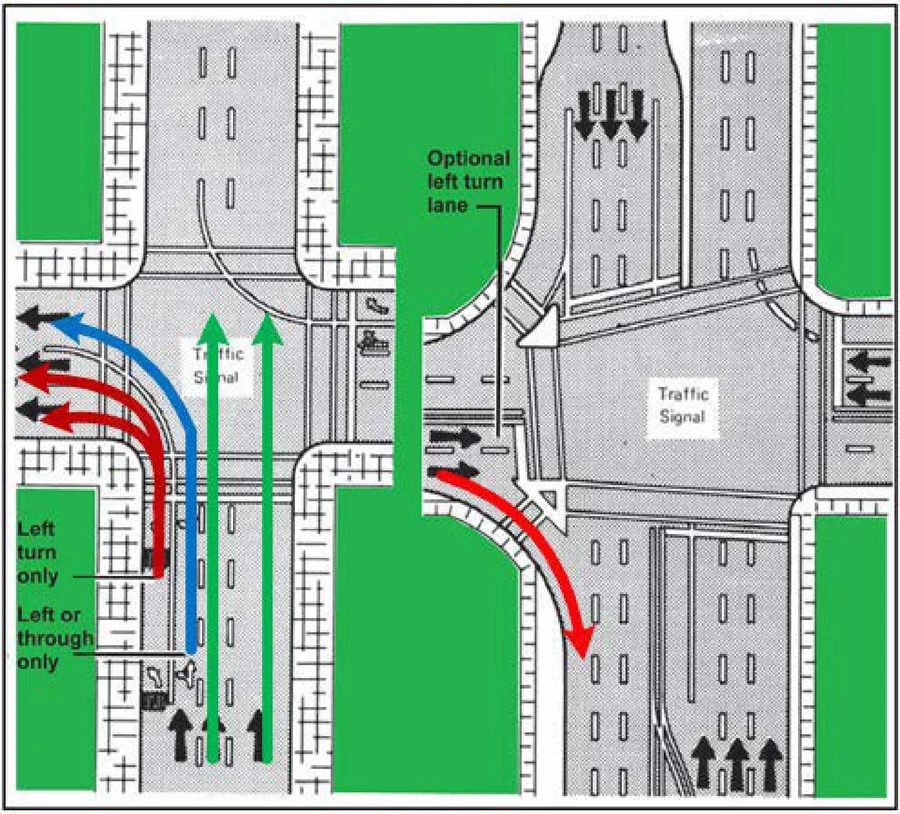
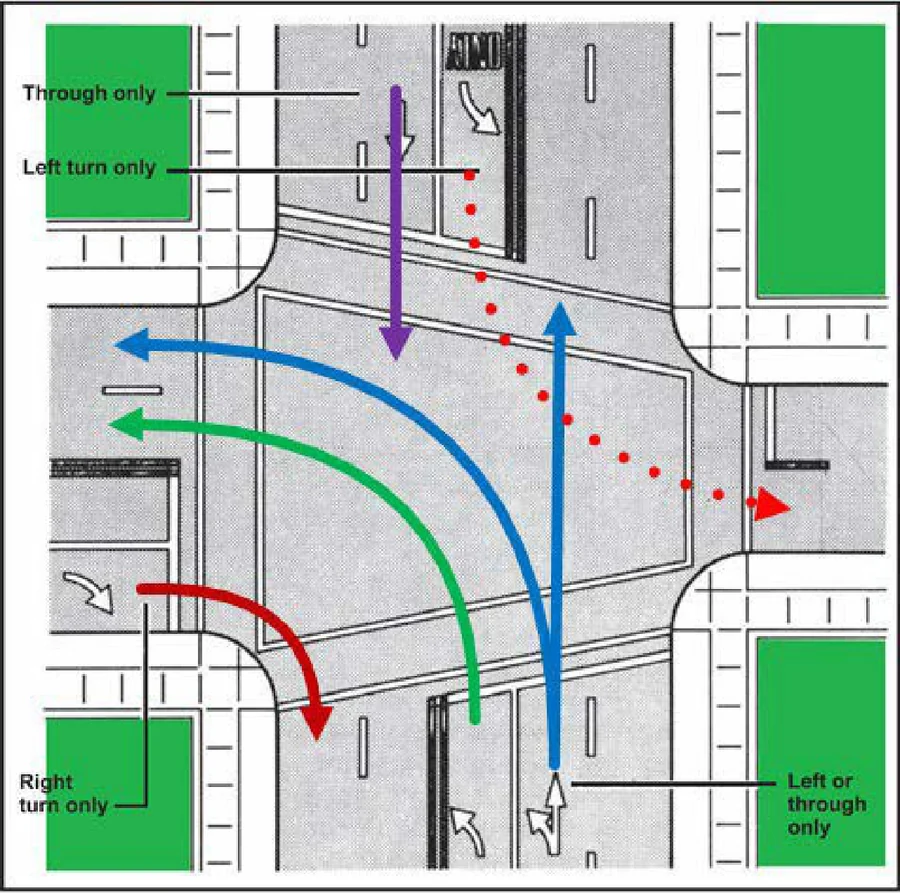
A pavement arrow means that lane is reserved exclusively for the movement shown. If the arrow is in your lane, you must make that movement.
Legends such as "STOP AHEAD," "SCHOOL," and "R X R" are not regulatory, but they're used only where a stop sign, school, or railroad crossing calls for extreme caution. Be prepared to stop.
Stop lines aren't used with crosswalks; there, the crosswalk line farthest from the crossroad marks the limit of the intersection. Stay outside it until you can enter safely.
Crosswalk lines don't have to be painted for pedestrians to have the right-of-way. Pedestrians have it at marked crosswalks or at intersections; always yield to them.
If you realize you're in the wrong lane to turn as you enter an intersection, don't turn and don't block traffic to get over. Continue around the block.
You're in a lane marked with a left-turn arrow but you wanted to go straight. You must turn left. Then find another route back rather than cutting across lanes.
Check your understanding
Read the question, decide on an answer, then open it to check the explanation. These are Roadwise study questions based on the source handbook.
What does a pavement arrow marking in a lane require you to do?
Make the movement indicated by the arrow if it's in your lane
Use it only when traffic is heavy
Follow it only if no signs are posted
Treat it as optional guidance only
Answer: Make the movement indicated by the arrow if it's in your lane
You must make the movement indicated by an arrow marking in your lane.