Roadwise States Wisconsin Driving lessons Turning, U-Turns & Y-Turns Wisconsin driving lesson · The Basics
Turning, U-Turns & Y-Turns A 3-minute lesson from the Wisconsin course. Read the rules and examples, follow the handbook page references, and check your understanding before you move on.
Read time 3 minutes
Course unit The Basics
Checkpoint questions 6
Source pages 18, 19, 20, 21 Every turn is the same routine: check mirrors, surroundings and blind spot, signal, yield, and stay in your lane from start to finish. Last-second changes are unsafe and could cause a crash.
Know the rule
Before turning onto a side road or driveway, check your mirrors and the vehicles behind you. Signal and yield the right-of-way.
Handbook p. 18 ↗ Know the rule
Don't change lanes while turning and don't cross the center line. Leave extra space for trucks and buses, which may cross the center line to turn.
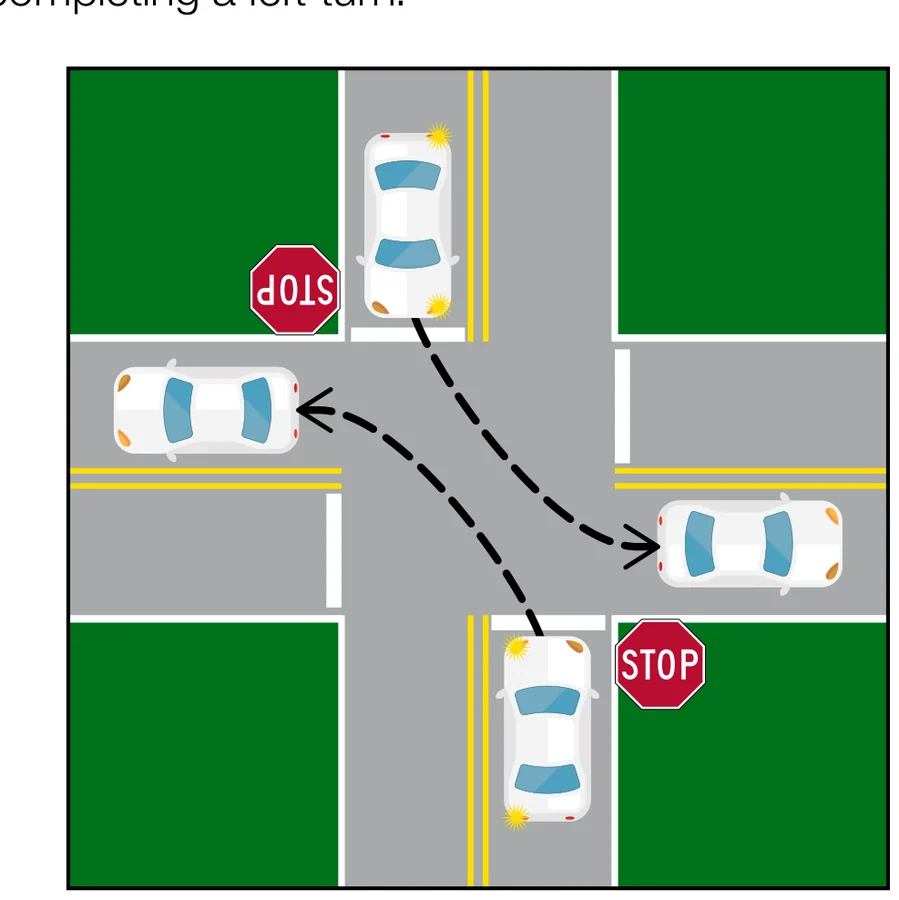
Handbook p. 18 ↗ Making a left turn Check mirrors and look ahead to make sure your path is clear Keep close to the center line Check for pedestrians crossing on the left Approach slowly and wait about halfway into the intersection Leave room for oncoming traffic to turn in front of you Handbook p. 18 ↗ Know the rule
While waiting to turn left, keep your wheels straight. If you're hit from behind with your wheels turned left, you'll be pushed into oncoming traffic.
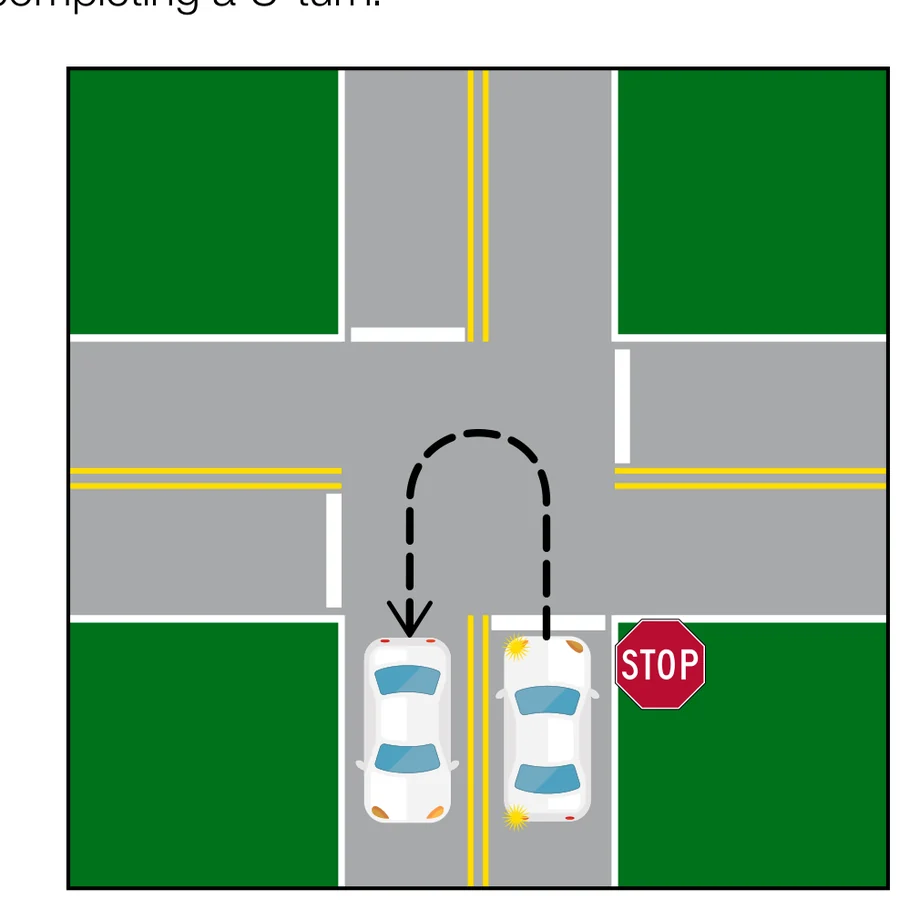
Handbook p. 18 ↗ Completing a left turn from a stop U-turn One smooth U-shaped turn that leaves you traveling the opposite direction. It can be very dangerous; it's allowed at some intersections.
Handbook p. 19 ↗ Know the rule
Check mirrors, traffic and any sign that prohibits U-turns. You may make a U-turn on any rural two-lane highway if it's done safely and doesn't interfere with traffic.
Handbook p. 19 ↗ Completing a U-turn Know the rule
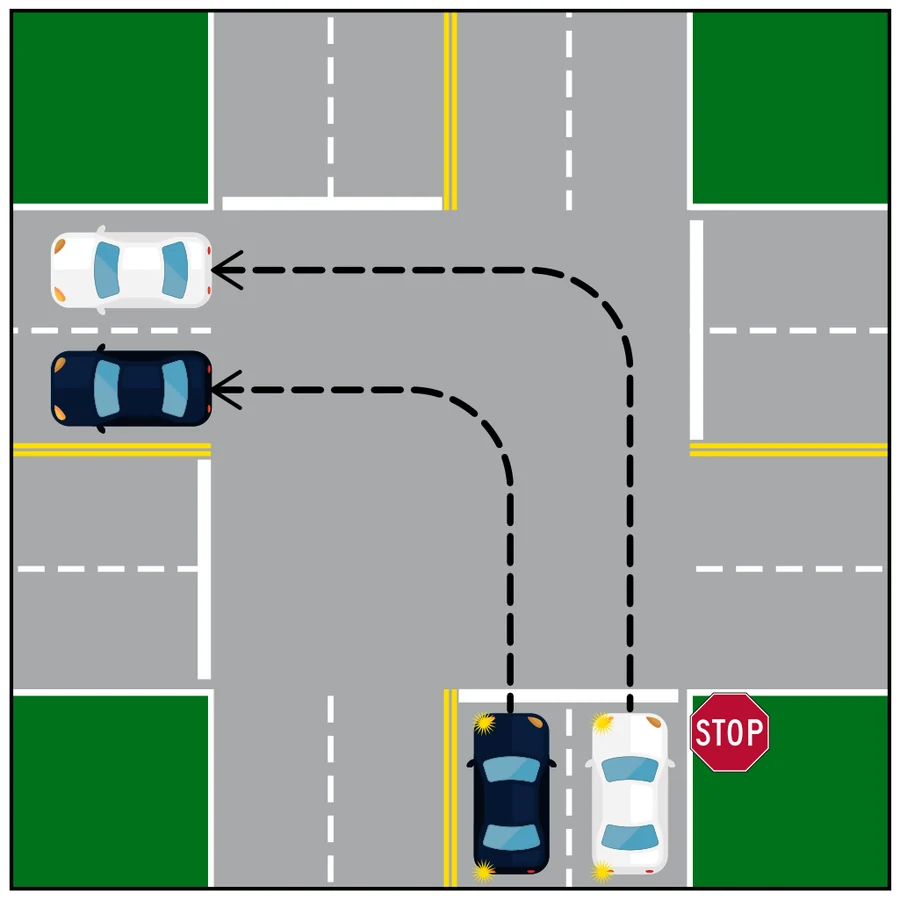
With multiple turn lanes, end up in the same lane you turned from: left-most lane into the left-most lane, middle lane into the middle lane.
Handbook p. 20 ↗ Left turn with multiple turn lanes Know the rule
To turn right off a four-lane roadway, turn from the lane nearest the right curb or edge of the roadway.
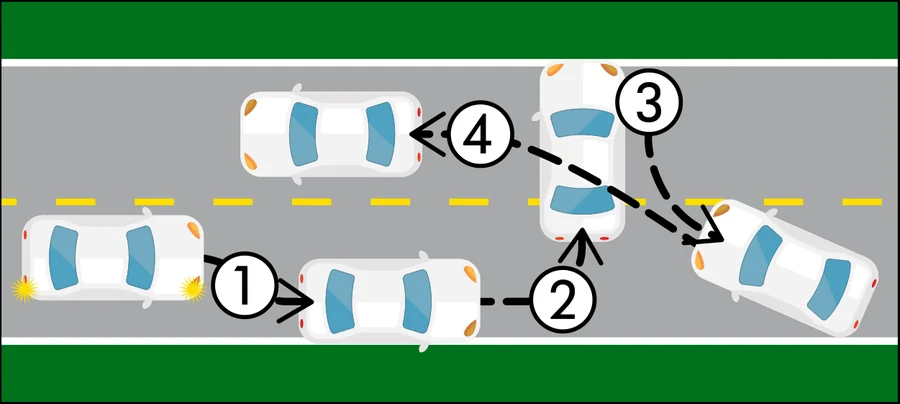
Handbook p. 20 ↗ Y-turn A turnaround used only in residential areas on streets too narrow for a U-turn. You'll also do one on the driving exam.
Handbook p. 21 ↗ Y-turn steps (check surroundings at each step) Signal right, check traffic to the right and in mirrors, pull as far right as possible, stop Signal left, check your blind spot, turn left to the opposite curb, stop Look over your right shoulder and reverse enough to move forward again, stop Check traffic left and right, pull forward and proceed in your lane Handbook p. 21 ↗ The Y-turn in four steps Put it into practice
You're waiting mid-intersection to turn left while oncoming cars pass. Keep the wheel pointed straight ahead; turn it only when the gap comes, so a rear-end bump can't shove you into oncoming traffic.
A useful reminder Wheels straight while you wait, turn them only when you go.
Check your understanding Read the question, decide on an answer, then open it to check the explanation. These are Roadwise study questions based on the source handbook.
Before turning, what should you check? Nothing, if you have the right-of-way Only your rearview mirror Only the side mirror on that side Mirrors, surroundings and blind spot Answer: Mirrors, surroundings and blind spot
Check your mirrors, surroundings and blind spot before turning.
Handbook p. 18 ↗ While turning, you should: Speed up to complete the turn quickly Change lanes gradually during the turn Cross the center line briefly if no one is coming Stay in your lane and not cross the center line Answer: Stay in your lane and not cross the center line
Stay in your lane while turning and do not cross the center line.
Handbook p. 18 ↗ Why should you leave extra space for large trucks and buses when they turn? They always turn slower than cars They must signal twice as long They may cross the center line during the turn They are required to stop fully before every turn Answer: They may cross the center line during the turn
Large vehicles may cross the center line during a turn, so leave them extra space.
Handbook p. 18 ↗ While waiting to turn left, why should you keep your steering wheel straight? So you aren't pushed into oncoming traffic if hit from behind It prevents your tires from wearing unevenly It's required by law at all intersections It lets oncoming drivers see your signal Answer: So you aren't pushed into oncoming traffic if hit from behind
If you turn the wheel left and get hit from behind, you'll be pushed into oncoming traffic.
Handbook p. 18 ↗ On what type of road can you make a U-turn if it can be done safely? Any interstate highway Any rural two-lane highway Any road with a solid yellow line Any one-way street Answer: Any rural two-lane highway
You can make a U-turn on any rural two-lane highway if done safely without interfering with traffic.
Handbook p. 19 ↗ To turn right off a four-lane roadway, you must turn from: The center lane only Either lane, then swing wide into the turn The lane nearest the left curb The lane nearest the right curb or edge Answer: The lane nearest the right curb or edge
Right turns off a four-lane road must be made from the lane nearest the right curb or edge.
Handbook p. 20 ↗ Previous lesson Space Between Vehicles Next lesson Passing & Changing Lanes About the source Roadwise’s Wisconsin course uses the driver handbook edition supplied with this study pack. This lesson cites source pages 18, 19, 20, 21. The linked PDF is a third-party mirror of the handbook, rather than a government-hosted page.
Open the handbook source PDF · View the source edition
For current application requirements, fees, appointments, and the format that applies to your age or license type, check Wisconsin’s DMV. Roadwise provides study material and does not issue permits or licenses.