A 3-minute lesson from the Washington course. Read the rules and examples, follow the handbook page references, and check your understanding before you move on.
Trains are heavy, often quieter and faster than they look, and can't stop quickly. Trust every warning at a crossing. Emergency vehicles also always get the right-of-way, and Washington tells you exactly how to clear a path.
Know the rule
Cross railroad tracks only at designated crossings. Flashing red lights at a crossing mean a train is approaching; stay outside the gates.
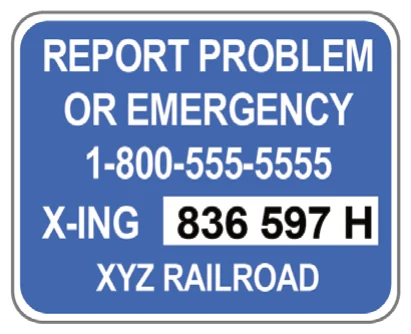
If anything is on or near the tracks, call the number on the blue and white Emergency Notification System sign and give the crossing ID number and your location. No sign? Dial 911.
Fire trucks, ambulances, and police cars using lights and/or sirens always have the right-of-way. As soon as you see or hear them, pull to the right side of the road and stop.
Crossing lights start flashing as you approach, but the gate hasn't come down and you don't see a train. Stop anyway, between 15 and 50 feet from the nearest rail, and wait until the lights stop flashing.
Check your understanding
Read the question, decide on an answer, then open it to check the explanation. These are Roadwise study questions based on the source handbook.
How close to the nearest rail must you stop when a railroad crossing signal is flashing?
Between 5 and 10 feet
Between 50 and 100 feet
Exactly 25 feet
Between 15 and 50 feet
Answer: Between 15 and 50 feet
Stop between 15 and 50 feet from the nearest rail when the crossing signal is flashing or the gate is lowering.