Washington driving lesson · Parking and Transporting
Hills, disabled parking, and EV charging spaces
A 3-minute lesson from the Washington course. Read the rules and examples, follow the handbook page references, and check your understanding before you move on.
On a hill, your wheels are backup for your parking brake: turned the right way, they stop the car from rolling into traffic. Special spaces for people with disabilities and for charging electric vehicles come with their own strict rules.
Know the rule
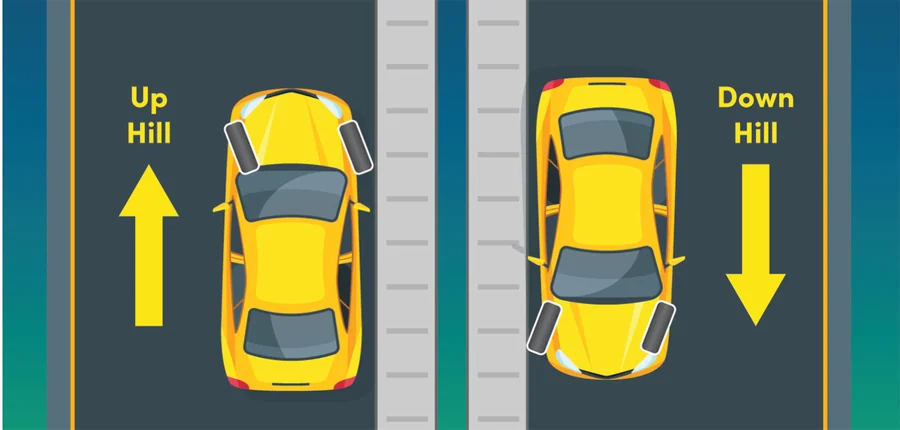
Always set your parking brake on a hill. Turning your wheels toward the edge of the road adds security in case the brake fails.
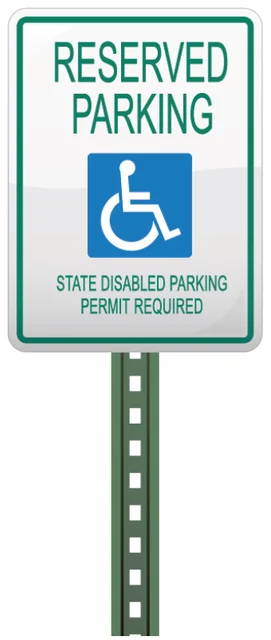
The white-striped access aisle next to a reserved space must be kept clear. You can be fined for parking without the required placard or for blocking the access aisle.
If a disability limits or impairs your ability to walk, you may apply for temporary or permanent disabled parking privileges. You and your physician complete the Disabled Parking Application for Individuals form.
You park facing downhill on a steep street with a curb. Set the parking brake and turn your wheels toward the curb until the front tire touches it. If the brake fails, the car rolls into the curb, not down the street.
Check your understanding
Read the question, decide on an answer, then open it to check the explanation. These are Roadwise study questions based on the source handbook.
You're parking facing up a hill with a tall curb. Which way should you turn your wheels?
Toward the curb
Straight ahead
Away from the curb
Either way, if the brake is set
Answer: Away from the curb
Facing uphill with a tall curb, turn the wheel away from the curb until the back of the front tire touches it, so a rollback stops at the curb.