A 3-minute lesson from the Washington course. Read the rules and examples, follow the handbook page references, and check your understanding before you move on.
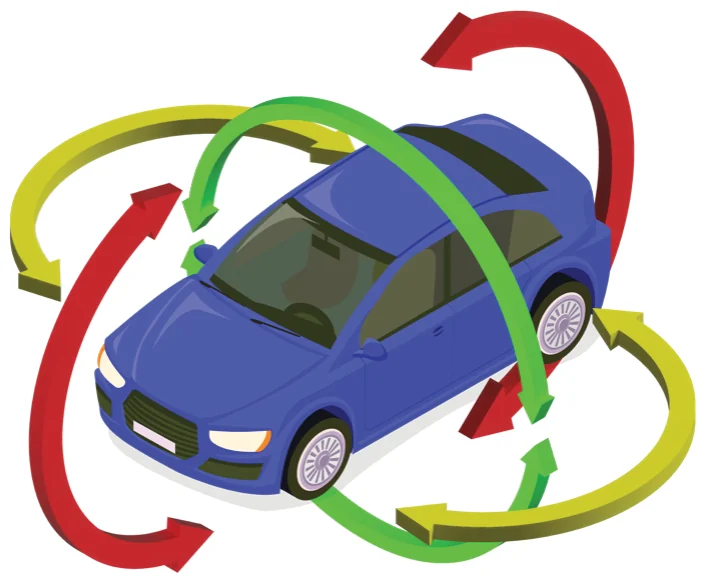
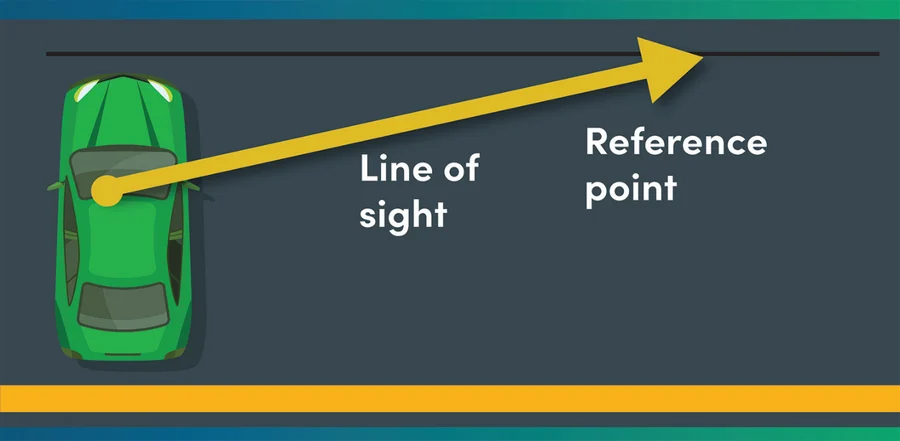
Your car's weight shifts every time you speed up, stop, or turn. Knowing which way it shifts helps you stay smooth and stable. Reference points on your car help you judge exactly where your bumper and wheels are when you can't see them.
Know the rule
Keep the vehicle's weight evenly balanced across the tires. Regular maintenance, correct tire pressure, and alignment checks help.
Pulling up to a stop line, glance down at your side mirror. When the line appears under the mirror, stop: your front bumper is about 3 to 6 inches behind the line.
Check your understanding
Read the question, decide on an answer, then open it to check the explanation. These are Roadwise study questions based on the source handbook.
What happens to your vehicle's weight when you accelerate?
It shifts to the outside wheels
It shifts to the back, increasing rear pressure
It shifts to the front
It stays perfectly balanced
Answer: It shifts to the back, increasing rear pressure
Accelerating shifts weight to the back, increasing pressure on the rear of the vehicle.