A 4-minute lesson from the Texas course. Read the rules and examples, follow the handbook page references, and check your understanding before you move on.
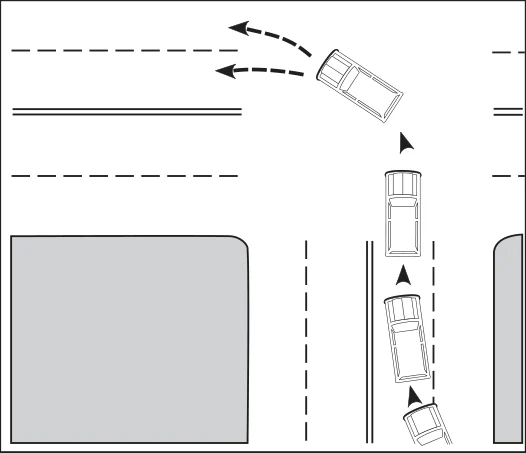
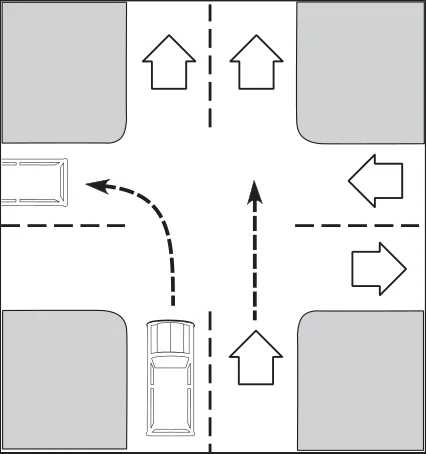
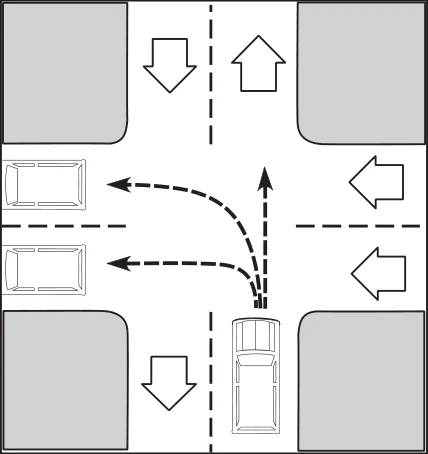
Turning looks simple, but many crashes and much confusion come from bad turns. Texas lists seven steps for a safe turn, plus the exact lanes to start and finish in for right and left turns.
Seven steps to a safe turn
Decide before you reach the turning point; never make a last-minute turn
Look behind and to both sides before changing lanes
Move into the proper lane as soon as possible (sooner when traffic is faster)
Signal at least 100 feet before you turn
Slow to a reasonable turning speed before the turn; don't use brake or clutch while turning
With a hand signal, hold it until you're close enough to the intersection for others to know your intention, but don't hold it during the turn; you need both hands on the wheel.
You're in the center lane when you realize your right turn is at the next corner, half a block away, and the right lane is full. Don't cut across. Go straight, then find a safe way to come back.
Check your understanding
Read the question, decide on an answer, then open it to check the explanation. These are Roadwise study questions based on the source handbook.
When making a right turn, where should you keep your vehicle?
Near the center line so you can swing wide
As close as possible to the right edge of the road
In the middle of the lane
In the left lane to widen the turn
Answer: As close as possible to the right edge of the road
For a right turn, keep as close as possible to the right edge of the road.