roadwise.Open study app

South Carolina driving lesson · Special Driving Situations

Work zones

A 2-minute lesson from the South Carolina course. Read the rules and examples, follow the handbook page references, and check your understanding before you move on.

Read time
2 minutes
Course unit
Special Driving Situations
Checkpoint questions
6
Source pages
128, 129

Work zones are increasingly dangerous places for workers and drivers. Lanes narrow, pavement gets rough, equipment moves and traffic stops without warning.

Work zone

An area where roadwork takes place; it may involve a lane closure, a detour and moving equipment.

Handbook p. 128 ↗
About 40,000

People injured per year in motor vehicle collisions in work zones

Handbook p. 128 ↗

Know the rule

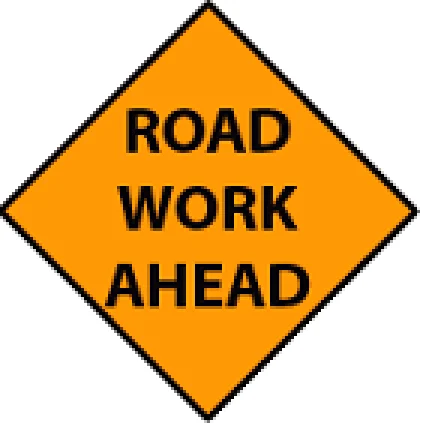
Approaching a work zone, watch for signs, cones, barrels, large vehicles and workers. Work zone signs have orange backgrounds with black letters or symbols.

Handbook p. 128 ↗
Road work ahead
Road Work Ahead sign

Know the rule

Always reduce your speed in a work zone, even if no workers are present. Narrower lanes and rough pavement can be hazardous.

Handbook p. 128 ↗

Know the rule

Endangering a highway worker can bring a fine and points on your driving record (SC Code §56-5-1535).

Handbook p. 128 ↗

In a work zone:

  • Reduce speed, increase following distance, watch traffic around you, and be ready to stop
  • Use extreme caution at night, whether or not workers are present
  • Adjust your lane position to leave space for workers and construction vehicles
  • Obey posted work zone signs until you see "End Road Work"
  • Expect delays, plan for them, and leave earlier
  • When possible, use alternate routes and avoid work zones
Handbook p. 129 ↗

Put it into practice

At 10 p.m. you drive through a highway work zone with no crews in sight. Slow down anyway. The lanes are narrower and the pavement rougher. Keep to the reduced speed until you pass the End Road Work sign.

Check your understanding

Read the question, decide on an answer, then open it to check the explanation. These are Roadwise study questions based on the source handbook.

About how many people are injured each year in work zone collisions?
  1. Approximately 40,000
  2. Approximately 4,000
  3. Approximately 400,000
  4. Approximately 400

Answer: Approximately 40,000

Approximately 40,000 people per year are injured as a result of motor vehicle collisions in work zones.
Handbook p. 128 ↗
Work zone signs typically have what color background?
  1. Yellow
  2. Orange
  3. Blue
  4. Green

Answer: Orange

Work zone signs have orange backgrounds and black letters or symbols.

Handbook p. 128 ↗
You should reduce your speed in a work zone:
  1. Only if workers are visible
  2. Only at night
  3. Even if there are no workers present
  4. Only if signs specifically require it

Answer: Even if there are no workers present

Always reduce your speed in a work zone, even if there are no workers present.

Handbook p. 128 ↗
Endangering a highway worker in a work zone may result in:
  1. Only a verbal warning
  2. No consequence unless a collision occurs
  3. Loss of vehicle registration only
  4. A fine and points on your driving record

Answer: A fine and points on your driving record

If you endanger a highway worker you may be fined and have points assessed against your driving record.

Handbook p. 128 ↗
You should observe posted work zone speed limits until you see:
  1. An 'End Road Work' sign
  2. The next intersection
  3. A green light
  4. A mile marker

Answer: An 'End Road Work' sign

Observe the posted work zone signs until you see the 'End Road Work' sign.

Handbook p. 129 ↗
When driving through a work zone at night, you should:
  1. Assume no caution is needed if no workers are visible
  2. Use extreme caution, workers or not
  3. Drive at normal highway speed
  4. Use high beams to spot workers

Answer: Use extreme caution, workers or not

Use extreme caution when driving through a work zone at night whether workers are present or not.

Handbook p. 129 ↗
Take the lesson checkpoint in the app

More in Special Driving Situations