Rhode Island driving lesson · Sharing the Road Safely
Night Driving & Headlights
A 3-minute lesson from the Rhode Island course. Read the rules and examples, follow the handbook page references, and check your understanding before you move on.
Driving at night is more dangerous than in daytime because you can't see as far ahead. Rhode Island law spells out exactly when your headlights must be on and when your high beams must come down.
Headlights must be on:
From sunset to sunrise
Any time you can't see 500 feet ahead
Whenever your windshield wipers are in use (rain, sleet, snow, etc.)
In the daytime when bad weather reduces visibility
To avoid glare from oncoming headlights, glance at the right edge of the road (the white fog line) until they pass. This also helps you spot pedestrians near the road edge.
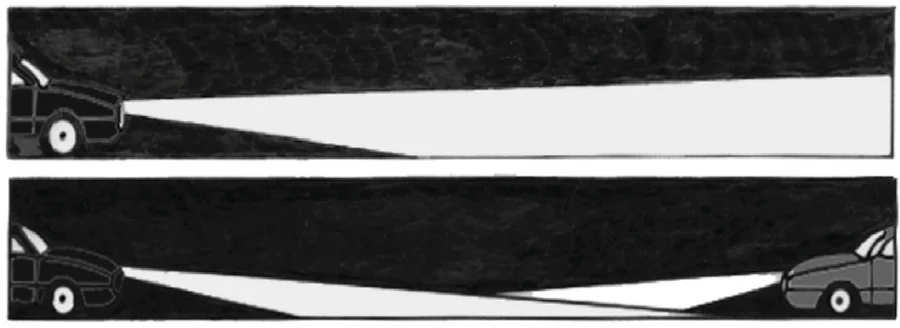
On a dark highway you have high beams on and see headlights coming over a hill about 600 feet away. Dim to low beams now—at least 500 feet before you meet—and glance toward the right fog line as the car passes.
Check your understanding
Read the question, decide on an answer, then open it to check the explanation. These are Roadwise study questions based on the source handbook.
When must you turn your headlights on, per Rhode Island law?
From 30 minutes after sunset to 30 minutes before sunrise
From sunset to sunrise, and anytime you can't see 500 feet ahead
Between 9 p.m. and 5 a.m., and in heavy fog
Anytime you can't see 1,000 feet ahead
Answer: From sunset to sunrise, and anytime you can't see 500 feet ahead
Headlights are required from sunset to sunrise, and anytime you cannot see 500 feet ahead of you.