roadwise.Open study app

Oregon driving lesson · Signs & Signals

Warning Signs: Lanes, Stops and Road Conditions

A 3-minute lesson from the Oregon course. Read the rules and examples, follow the handbook page references, and check your understanding before you move on.

Read time
3 minutes
Course unit
Signs & Signals
Checkpoint questions
6
Source pages
19, 20

A second group of yellow signs warns about lanes joining or ending, controls you'll meet ahead, and road conditions that call for less speed. Most tell you to slow down and get ready before you reach the hazard.

Lane and traffic-flow signs

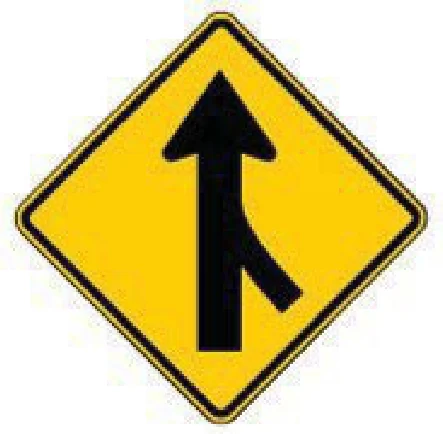
  • Merge: traffic is merging from the side shown
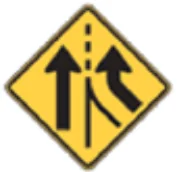
  • Add Lane: two roadways join together — you do not need to merge
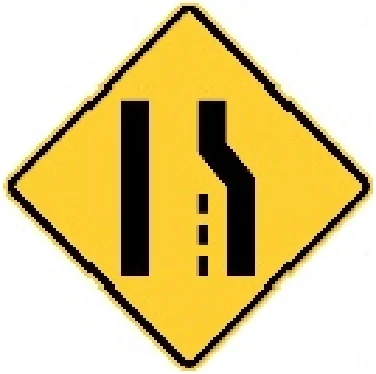
  • Lane Reduction: the indicated lane ends soon; vehicles in it must merge into the through lane
  • Two-Way Traffic Ahead: the one-way road joins a two-way road — you'll face oncoming traffic
  • Divided Highway Begins or Ends: the divided highway begins or ends — keep to the right
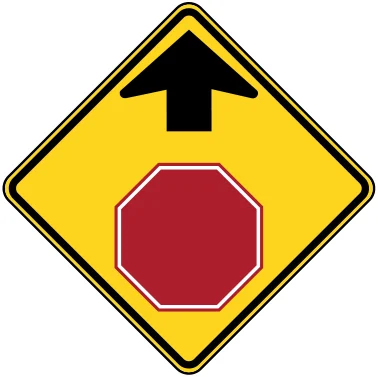
  • Stop Ahead: there's a stop sign ahead — slow down and prepare to stop
Handbook p. 19 ↗
Merge
Merge
Merge
Add Lane
Right lane ends
Lane Reduction
Stop ahead
Stop Ahead

Signs for what's ahead

  • Signal Ahead: a traffic signal is ahead — slow down and be ready to stop
  • Reduced Speed Limit Ahead: prepare to slow down
  • Roundabout Ahead: a roundabout intersection is ahead
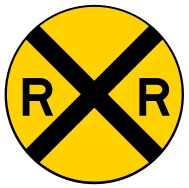
  • Railroad Advance: a railroad crossing is ahead — you may have to stop
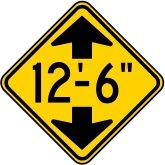
  • Low Clearance: don't proceed if your vehicle is too tall for the overpass
  • Hill: a steep grade is ahead
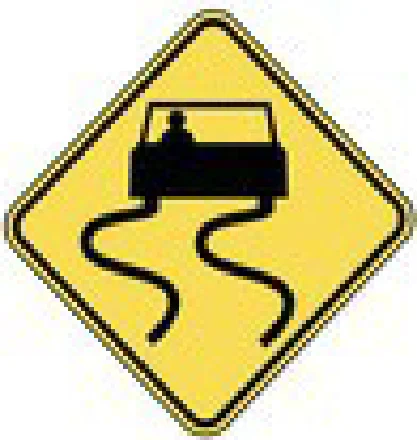
  • Slippery When Wet: the pavement is unusually slick when wet
  • Deer: deer often cross here — be alert and slow down if you see deer or other wildlife
Handbook p. 20 ↗

Know the rule

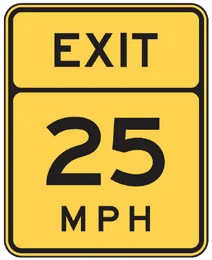
Advisory Speed: advises the safe speed for freeway ramps and curves. It may be used with other signs, and it may be electronic and change based on current conditions.

Handbook p. 20 ↗
Railroad crossing ahead
Railroad Advance
Low clearance
Low Clearance
Advisory speed
Advisory exit speed
Slippery when wet
Slippery When Wet

Put it into practice

A yellow sign shows a lane line ending, and you're in the right lane that stops. That's Lane Reduction: you must merge into the through lane. If the sign instead shows two roads joining (Add Lane), you keep your lane with no need to merge.

Check your understanding

Read the question, decide on an answer, then open it to check the explanation. These are Roadwise study questions based on the source handbook.

An Add Lane sign means:
  1. Two roads join; no merge is needed
  2. You must merge immediately
  3. A lane is closing ahead
  4. The right lane ends and you must merge left

Answer: Two roads join; no merge is needed

An Add Lane sign means a new lane forms; merging is not required.
Handbook p. 19 ↗
A Lane Reduction sign means vehicles in the ending lane must:
  1. Stop and wait for a gap
  2. Merge into the continuing through lane
  3. Speed up to pass other traffic
  4. Pull onto the shoulder

Answer: Merge into the continuing through lane

The ending lane must merge into the continuing through lane.

Handbook p. 19 ↗
At a Divided Highway Begins sign, you should:
  1. Move to the center lane
  2. Prepare for oncoming traffic
  3. Keep to the right
  4. Prepare to make a U-turn

Answer: Keep to the right

Divided highway signs instruct you to keep to the right.

Handbook p. 19 ↗
A yellow Railroad Advance sign warns that:
  1. A train is approaching right now
  2. Tracks run alongside the road ahead
  3. You must always stop, even with no train
  4. A railroad crossing is ahead

Answer: A railroad crossing is ahead

The Railroad Advance sign warns that a railroad crossing is ahead and you may have to stop.

Handbook p. 20 ↗
A Low Clearance sign warns about:
  1. An overpass that may be too low
  2. A steep downhill grade
  3. A bridge ahead that may be too narrow for trucks
  4. A speed limit reduction

Answer: An overpass that may be too low

Low Clearance signs warn of overpasses that may be too low.

Handbook p. 20 ↗
An Advisory Speed sign is typically used for:
  1. Reducing speed in school zones during school hours
  2. Suggesting a safe speed on ramps and curves
  3. Residential streets only
  4. Setting the legal maximum speed limit

Answer: Suggesting a safe speed on ramps and curves

Advisory speed signs suggest a safe speed for ramps and curves.

Handbook p. 20 ↗
Take the lesson checkpoint in the app

More in Signs & Signals