A 3-minute lesson from the Oregon course. Read the rules and examples, follow the handbook page references, and check your understanding before you move on.
People on bicycles are harder to see than cars and easy to miss in your blind spot. Potholes, glass, litter, storm grates, railroad tracks and opened car doors can make a rider swerve or slow suddenly. Give them room and be ready to slow — you can't always predict what they'll do.
Sharing the road with bicycles
Never drive or park in a bike lane; you may cross it when turning or using an alley, driveway or private road
Don't move into or travel in a bike lane to prepare for a turn
Yield to bicyclists in a bike lane or on a sidewalk before turning across it
Yield to bicyclists at intersections just as you would to other vehicles
At speeds greater than 35 mph, you may pass a person on a bicycle in your lane only if you leave enough distance to avoid contact if they were to fall.
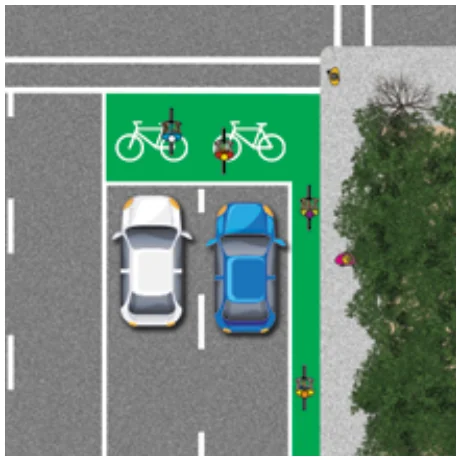
Usually a green painted box with a white bicycle symbol at an intersection, where bicyclists wait in front of cars at a red signal. Bike lanes leading to and from it may also be green.
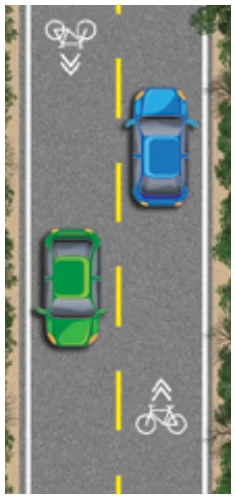
You're doing 45 mph on a road with a broken yellow center line, and a bicyclist is riding in your lane. You may pass on the left when it's safe to pass, leaving enough distance that you wouldn't hit the rider if they fell.
Check your understanding
Read the question, decide on an answer, then open it to check the explanation. These are Roadwise study questions based on the source handbook.
When may you cross a bike lane?
Anytime there is no cyclist present
Whenever traffic in your lane is slow
Only to pass a left-turning vehicle or to park
Only to turn, or to enter/exit an alley, driveway or private road
Answer: Only to turn, or to enter/exit an alley, driveway or private road
You may not drive or park in a bike lane, but you may cross one when turning or when entering or leaving an alley, driveway or private road.