A 3-minute lesson from the Ohio course. Read the rules and examples, follow the handbook page references, and check your understanding before you move on.
Safe drivers see trouble early. Build a search pattern — far ahead, to the sides, behind — and match your speed to what the road is doing right now: curves, rain, ice and standing water all demand less speed.
Know the rule
You are responsible for knowing what's happening around your vehicle. Use the same searching pattern every time you drive.
Curves: slow to a safe speed before the curve so you can use slight, constant acceleration through it. Slow more when traction is poor, when following others, or when you can't see the end of the curve.
Slippery roads: reduce speed at the first sign of rain, snow, sleet or ice. Tires grip less, stopping takes longer and turning without skidding is harder.
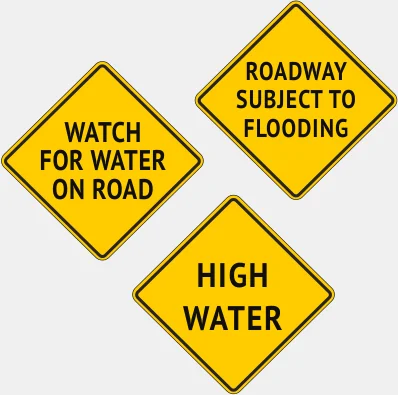
Flood warning signs: watch for water, roadway subject to flooding, high water
Put it into practice
Heavy rain has left puddles across the highway and your steering suddenly feels light. You're hydroplaning: don't slam the brakes — ease off the gas slowly until the tires grip again.
Check your understanding
Read the question, decide on an answer, then open it to check the explanation. These are Roadwise study questions based on the source handbook.
How far ahead should you look down your intended path of travel?
5 to 10 seconds
20 to 30 seconds
1 to 2 seconds
45 to 60 seconds
Answer: 20 to 30 seconds
Ideally, try to look at what is occurring 20 to 30 seconds in front of your car.