Roadwise States Ohio Driving lessons Fog, winter driving & work zones Ohio driving lesson · Special Driving Situations
Fog, winter driving & work zones A 3-minute lesson from the Ohio course. Read the rules and examples, follow the handbook page references, and check your understanding before you move on.
Read time 3 minutes
Course unit Special Driving Situations
Checkpoint questions 6
Source pages 32 Fog hides hazards, ice steals traction, and work zones squeeze lanes around people and machines. Each calls for the same response: slow down and give yourself more room.
Know the rule
Fog is one of the most hazardous driving conditions. Slow down.
Handbook p. 32 ↗ Driving in fog: Move with the flow of traffic, but drive slower and expect to stop at any time Keep a consistent distance behind the vehicle in front Use low beam headlights, not high beams Keep scanning for hazards; shift your gaze instead of staring If in a crash, get your vehicle off the road as soon as safely possible If it can't move, leave flashers and lights on and set up flares if possible Handbook p. 32 ↗ Know the rule
In winter, a slower speed is always necessary — especially on snow-covered or icy roads. Leave more distance than usual, because stopping distances are longer on slippery roads.
Handbook p. 32 ↗ Know the rule
Tap the brake lightly to reduce momentum without losing traction.
Handbook p. 32 ↗ Know the rule
If you start to skid, take your foot off the accelerator and turn the wheel in the direction of the skid. Never apply the brakes while skidding.
Handbook p. 32 ↗ Winter driving: slow down on snow and ice Work zone An area where roadwork takes place, which may include lane closures, detours and moving equipment.
Handbook p. 32 ↗ Know the rule
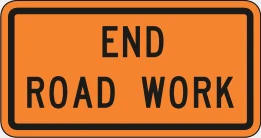
Watch for signs, cones, barrels, large vehicles and workers. Work zone signs have an orange background with black letters or symbols.
Handbook p. 32 ↗ Know the rule
Always reduce your speed in a work zone, even if no workers are present — narrower lanes and rough pavement are hazards.
Handbook p. 32 ↗ END ROAD WORK Put it into practice
The highway is wet and just above freezing. The road feels fine, but a bridge ahead is shaded. Ease off before the bridge — it may already be icy even when the road isn't.
A useful reminder Fog = low beams, not high beams — and keep shifting your gaze instead of staring.
Check your understanding Read the question, decide on an answer, then open it to check the explanation. These are Roadwise study questions based on the source handbook.
What type of headlights should you use while driving in fog? Low beam headlights High beam headlights Parking lights only No headlights at all Answer: Low beam headlights
In fog, use low beam headlights (not high beams) and keep scanning for hazards.
Handbook p. 32 ↗ If your vehicle starts to skid on ice, what should you do? Apply the brakes firmly Ease off the accelerator and steer in the direction of the skid Turn the wheel opposite the skid Accelerate to regain traction Answer: Ease off the accelerator and steer in the direction of the skid
If your vehicle starts to skid, take your foot off the accelerator and steer in the direction of the skid — never brake while skidding.
Handbook p. 32 ↗ Which road surfaces tend to ice first in winter conditions? Wide-open highways in direct sun Freshly paved roads Bridges, overpasses, and shade Freshly salted roads Answer: Bridges, overpasses, and shade
Bridges, overpasses, and shaded spots on a highway ice first.
Handbook p. 32 ↗ How should you approach a work zone, even if no workers are visible? Maintain your normal speed Speed up to clear it quickly Switch to the leftmost lane Reduce your speed Answer: Reduce your speed
Always reduce your speed in a work zone, even if there are no workers, due to narrower lanes and rough pavement.
Handbook p. 32 ↗ Using high beam headlights improves visibility when driving through fog. True False Answer: False
The handbook says to use low beam headlights, not high beams, in fog.
Handbook p. 32 ↗ You're driving on a bridge in freezing temperatures where the rest of the road looks clear. What should you expect? The bridge may be icy The bridge is always safer than the road Ice only forms on roads, never bridges Bridges heat up faster than roads Answer: The bridge may be icy
Bridges, overpasses, and shaded spots on a highway ice first, even when the surrounding road looks clear.
Handbook p. 32 ↗ Previous lesson Headlights & night driving Next lesson Visual search & adjusting speed More in Special Driving Situations About the source Roadwise’s Ohio course uses the driver handbook edition supplied with this study pack. This lesson cites source pages 32. The linked PDF is a third-party mirror of the handbook, rather than a government-hosted page.
Open the handbook source PDF · View the source edition
For current application requirements, fees, appointments, and the format that applies to your age or license type, check Ohio’s BMV. Roadwise provides study material and does not issue permits or licenses.