roadwise.Open study app

North Dakota driving lesson · Signs, Signals & Markings

Work zones, devices & flaggers

A 3-minute lesson from the North Dakota course. Read the rules and examples, follow the handbook page references, and check your understanding before you move on.

Read time
3 minutes
Course unit
Signs, Signals & Markings
Checkpoint questions
6
Source pages
17, 18

Work zones change the road without notice: narrow lanes, uneven pavement, loose gravel and workers only inches from traffic. Orange signs are your cue to slow down and follow the devices and flaggers.

Know the rule

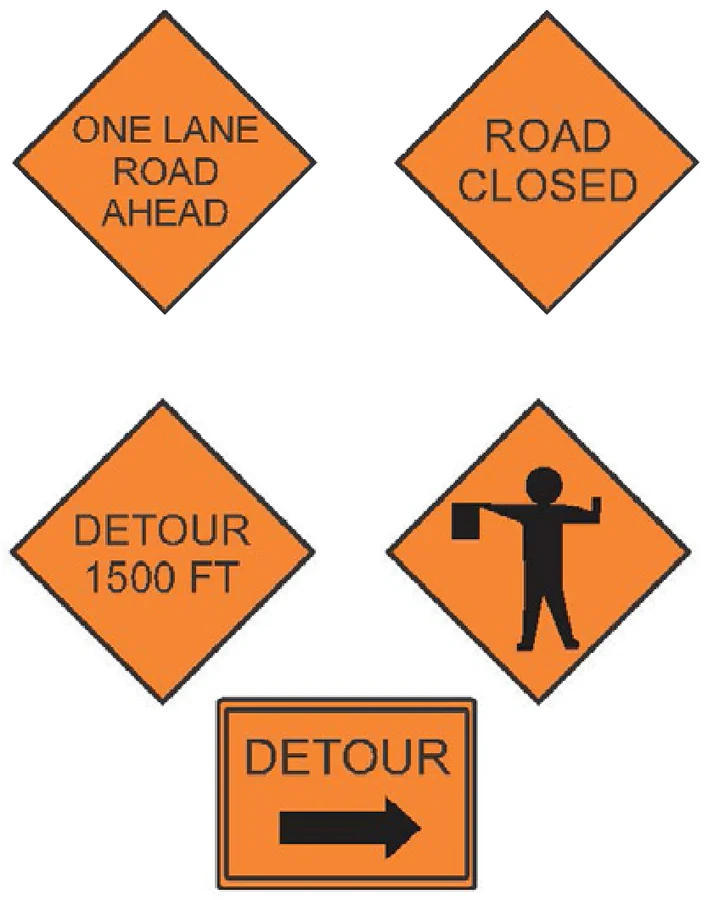
Work zone signs are orange with a black legend. Most are diamond-shaped; a few are rectangular. You may also see electronic signs with changing messages.

Handbook p. 17 ↗
Work zone warning sign sequence (composite)
Orange work zone signs
$80

Minimum fee for breaking a work zone speed limit when work is in progress and workers are present

Handbook p. 17 ↗

Channelizing devices

Barricades, vertical panels, drums, cones and tubes. They warn you about work areas and guide you safely through the work zone.

Handbook p. 17 ↗

Know the rule

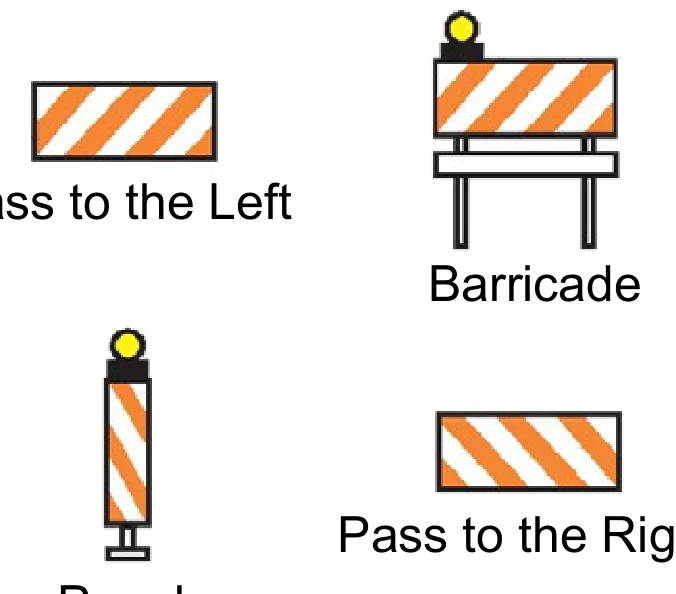
Diagonal stripes on a barricade or vertical panel show which side to pass on. Stripes sloping down to the right mean keep to the right; stripes sloping down to the left mean keep to the left.

Handbook p. 17 ↗
Channelizing devices (barricade, panel, drum)
Barricades and vertical panels: pass to the left or pass to the right

Know the rule

Large flashing or sequencing arrow panels, used day and night, direct drivers into certain lanes and warn that part of the road ahead is closed. They can also run in a caution mode.

Handbook p. 17 ↗
Arrow panel (caution/random flash mode)
Flashing arrow panel

Know the rule

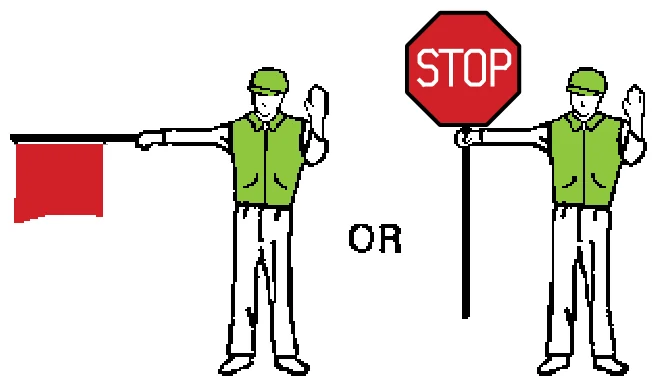
Flagpersons wear orange, yellow, strong yellow-green or fluorescent vests, shirts or jackets. They use red flags or STOP/SLOW paddles to stop, slow or guide traffic.

Handbook p. 18 ↗
Flagger with flag or stop paddle
Flagger signaling stop with a red flag or STOP paddle

Work zone safety tips:

  • Pay attention: uneven pavement, narrow lanes, heavy equipment and loose gravel
  • Slow down: most summer work zone crashes involve excessive speed; workers are inches away
  • Watch for orange signs: over 25,000 serious injuries happen in work zones nationally each year
  • 98 percent of work zone fatalities are travelers: motorists and passengers
  • Work zones can appear at any time of day; crews work day and night
Handbook p. 18 ↗

Put it into practice

A flagger ahead turns a paddle from STOP to SLOW. Move ahead at a reduced speed, follow the flagger's directions and the cones, and watch for workers and equipment near your lane.

Check your understanding

Read the question, decide on an answer, then open it to check the explanation. These are Roadwise study questions based on the source handbook.

What color are most work-zone signs?
  1. Red with white letters
  2. Orange with a black legend
  3. White with black letters
  4. Yellow with a black legend

Answer: Orange with a black legend

Most signs in highway work areas are diamond shaped, orange with a black legend.
Handbook p. 17 ↗
Diagonal stripes sloping downward to the right on a barricade mean what?
  1. Keep to the right
  2. Pass on either side
  3. Keep to the left
  4. Stop immediately

Answer: Keep to the right

Stripes sloping downward to the right guide the driver to keep to the right; sloping left means keep left.

Handbook p. 17 ↗
What is the minimum fee for failing to comply with a posted work zone speed limit when workers are present?
  1. $250
  2. $80
  3. $100
  4. $50

Answer: $80

Failure to comply with work zone speed limits carries an $80 minimum fee when work is in progress and workers are present.

Handbook p. 17 ↗
What do flagpersons commonly wear to direct traffic through a work zone?
  1. Orange, yellow, or fluorescent vests or jackets
  2. Red vests or jackets
  3. Dark blue uniforms only
  4. Plain white clothing

Answer: Orange, yellow, or fluorescent vests or jackets

Flagpersons wear orange, yellow, strong yellow-green, or fluorescent vests, shirts, or jackets to be visible.

Handbook p. 18 ↗
What must you do when you see channelizing devices like drums and cones marking a highway work area?
  1. Follow their guidance through the work zone
  2. Pass them on whichever side is convenient
  3. Ignore them if no workers are visible
  4. Stop completely until they are removed

Answer: Follow their guidance through the work zone

Channelizing devices such as barricades, panels, drums, cones, and tubes guide drivers safely through highway work zones.

Handbook p. 17 ↗
Barricades, drums, cones, and tubes used in work zones are called channelizing devices.
  1. True
  2. False

Answer: True

Barricades, vertical panels, drums, cones, and tubes are commonly used channelizing devices in work zones.

Handbook p. 17 ↗
Take the lesson checkpoint in the app

More in Signs, Signals & Markings